


Countless objects ready to print. And the library grows every week.
Between two frames, the machine doesn't sit idle. It makes the cases, key rings, seasonal window displays and workshop tools you used to order elsewhere, or didn't offer at all.
A printer that runs twice a week is a service. A printer that runs every day is a production station.
That's the whole difference between equipment you pay off and equipment that pays for itself without you thinking about it.
Repairs come when they come. A final frame sells when the customer is ready. Accessories get made when you decide: during an eye exam, between two appointments, on Monday morning. This is the service that fills the machine's idle hours.
A few grams
A key ring weighs 1 g and comes out in about ten minutes. A case, a few dozen grams. The cost price of a goodie is the weight of material: no supplier price, no minimum order, no box of 500 pieces to get rid of.
None
You're not buying objects, you're buying the ability to make them. What you don't sell, you never produced.
What it looks like for real
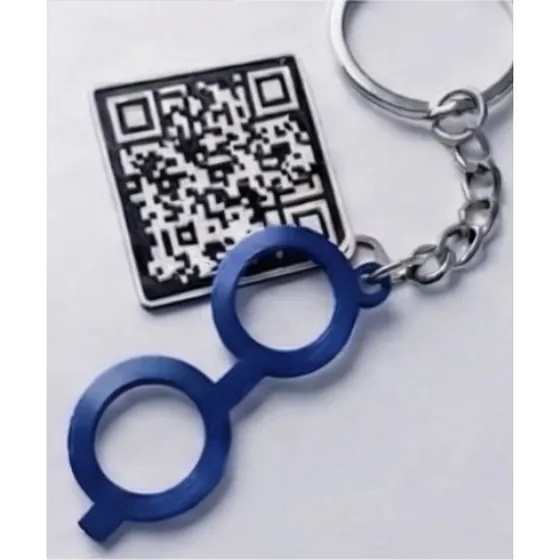

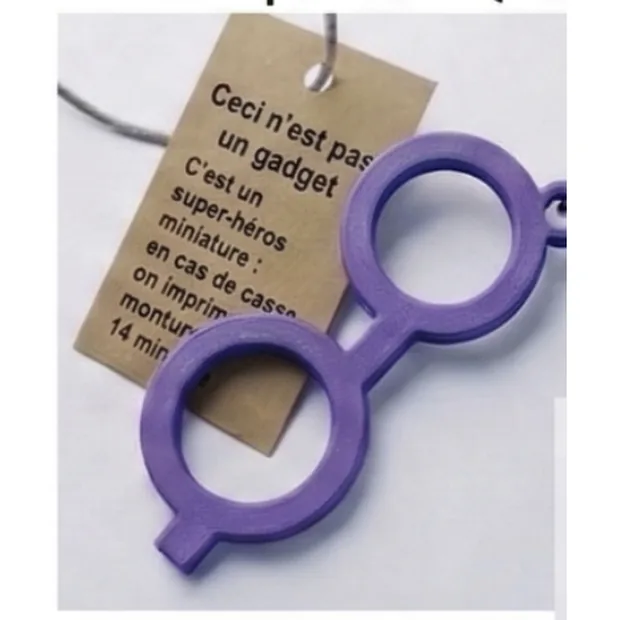
“This isn't a gadget. It's a miniature superhero: if your glasses break, we print your frame in fifteen minutes.”
The key ring tag, exactly as it's already printed. In one sentence, it turns a welcome gift into a service promise: the customer leaves with a quote and a service promise that lifts your sales rate.
Why this one object sums up the whole page
It costs a gram of material and about ten minutes of machine time. It carries the store's name. It's given away, so it goes into a pocket, onto a key chain, into a bag, and stays there for years.
And it doesn't sell a key ring: it sells the repair service. That's exactly what OOlib does for the other two services: it puts them into people's hands.
Six families, a growing library
These aren't theoretical categories: this is the actual structure of the OOmade library, as your 1,000 equipped peers access it from their stores.
Signature
Items with your name
Glasses cases, key rings, tokens, all customized with the name of the store or chain. It's the most used family, and the one that turns a free accessory into a brand carrier.
Key rings
The welcome gift
A family of its own, because it's the item given away most often: when handing over new glasses, at an opening, to a partner. About ten minutes of printing, one gram of material.
Accessories
Window and counter
Items that are useful and get people talking: sports optical clips, shopping-cart tokens, business card holders, hooks, wipe dispensers. Small things you give away or sell, carrying the store's name.
Store fittings
Store fittings
Frame holders, mini displays, fittings for window display stands. Made to your measurements rather than bought from a supplier's catalog: a broken holder or a size that doesn't exist anywhere is sorted out with one night of printing.
Tools
The workshop and the eye exam
It's the family nobody expects, and the one used every day: a frame-bending tool, eye occluders, flipper faces and pinholes for the eye exam. Your own instruments, made your way, with the store's name, and remade the day they wear out or go missing.
Seasonal goodies
The retail calendar
Valentine's Day, Easter, Mother's Day, Father's Day, summer, Halloween, Christmas, Pink October. A new window display every six weeks, printed the day before, with no order and no lead time. The decorations are recyclable: February's window doesn't end up in the trash in March.
An item can be yours alone, or your whole chain's.
Each item in the library is assigned a scope: one specific store, an entire chain, or the whole OOmade network.
An independent optician has a case designed with their name: it's theirs. A chain has its key ring developed: it becomes available in all its equipped stores the same day, with no logistics, no restocking, no central warehouse. It's point-of-sale material rolled out by update rather than by truck.
For chain management
A classic promotional item is ordered by the tens of thousands, stored, distributed, and ends up marked down. The same item in OOlib is pushed to the network in one go, and each store prints only what it uses.
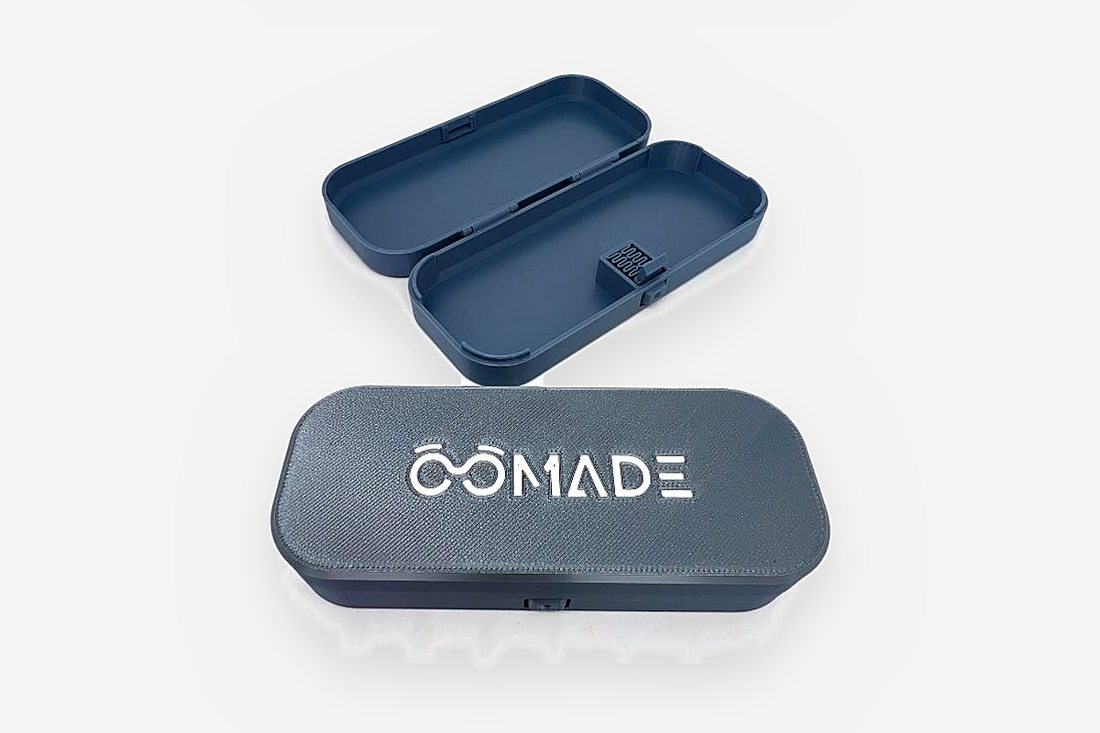
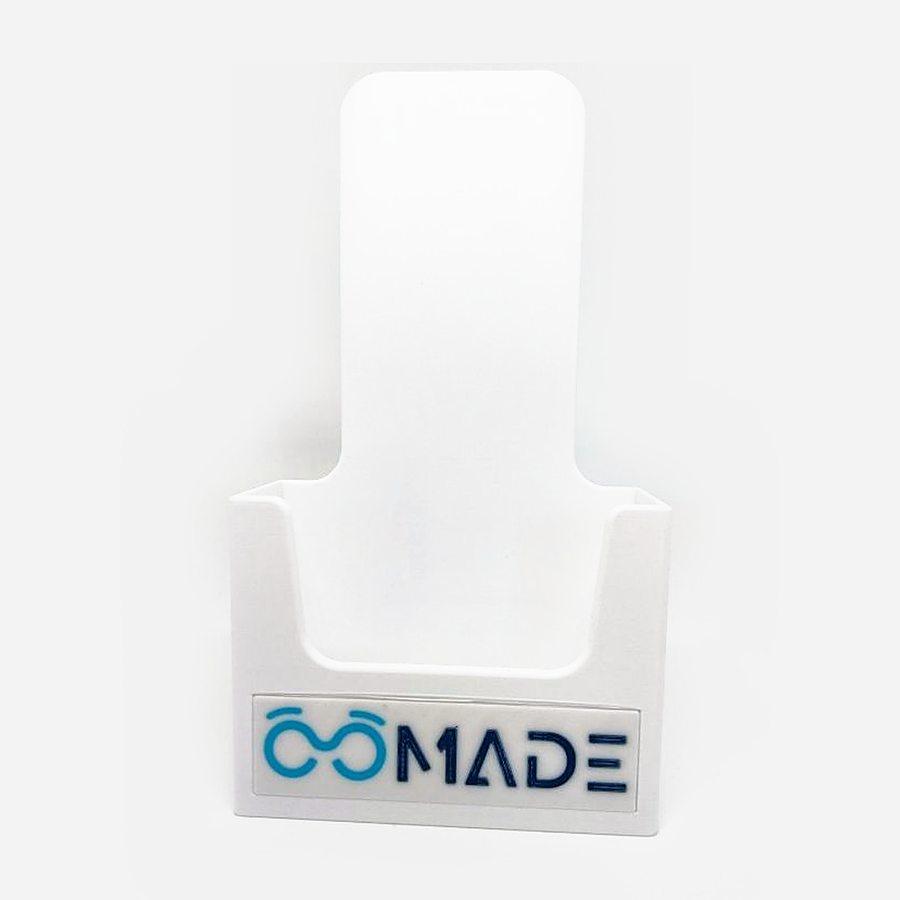
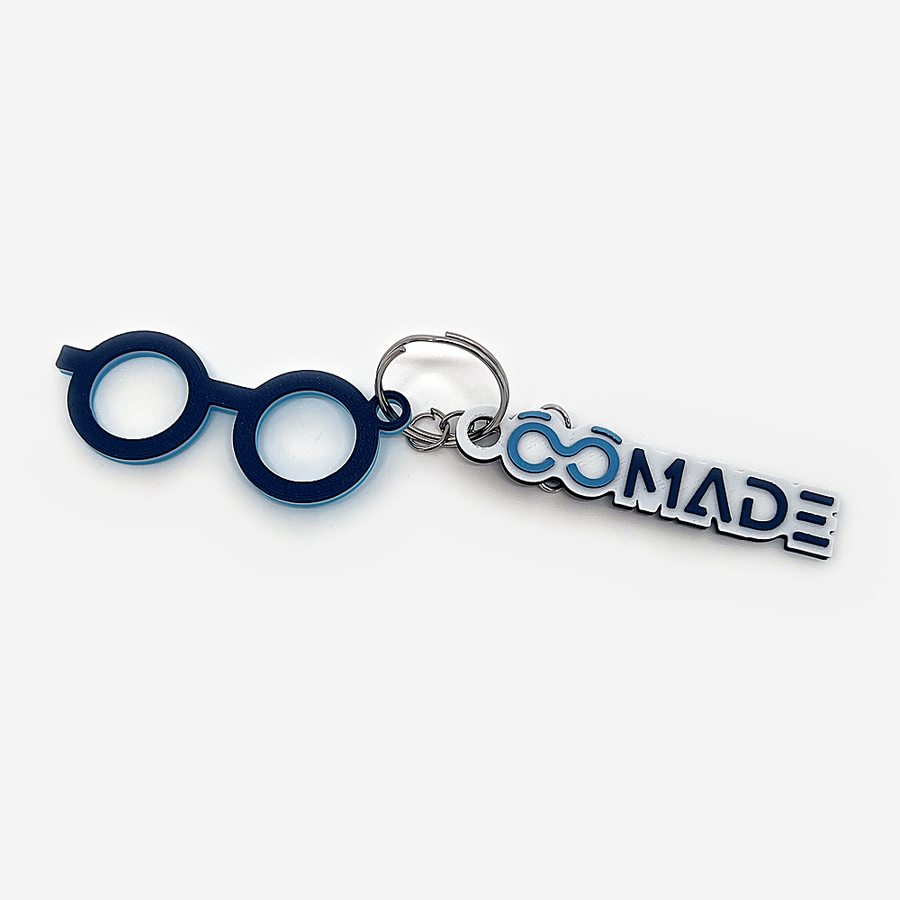
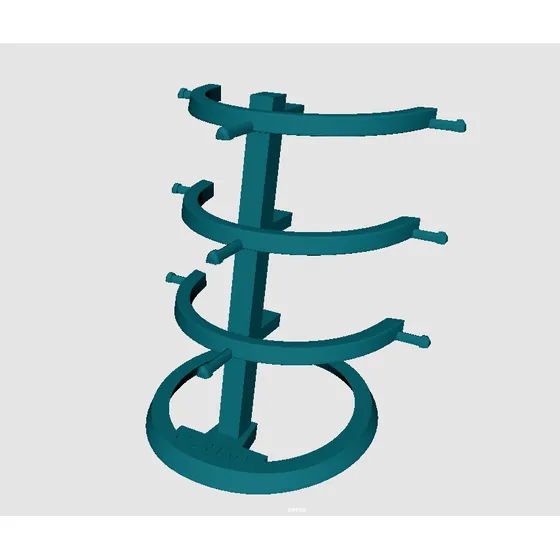
Three items straight out of an in-store machine. In the app they only exist as a monochrome render; printed, they carry the store's color and name.
Four examples from the catalog
Actual print times and weights, taken from the library.
- Key ring
- About ten minutes · 1 g
- The welcome gift. You start a batch during an eye exam.
- Display item
- Less than two hours · 75 g
- A point-of-sale piece printed overnight, ready in the morning.
- Openwork piece
- About three hours · 52 g
- An intricate decoration, started on Friday evening for the weekend.
- Batch of 18 tokens
- Half a day · 86 g
- Eighteen items in one go, for less than a hundred grams of material.
Taken from the OOmade library on September 12, 2026. Times vary with printer model and settings.
A new window display every six weeks, printed the day before.
Valentine's Day, Easter, Mother's Day, Father's Day, summer, back to school, Pink October, Halloween, Christmas. Nine retail moments a year that most stores let slip by, because ordering seasonal point-of-sale material costs more than it brings in.
With a library and a machine, the trade-off disappears: you decide on Tuesday, the window is ready on Wednesday, and you have nothing to store in January for a February campaign.
What we're asked most often
Can I have my own items designed?
Yes, and that's the main use of the Signature family. Cases and key rings with a store's name are designed on request, then assigned to that store, or to a whole chain for a network order.
How much does a goodie cost?
The cost price is the material used: a few grams for a key ring, a few dozen for a case. There's no unit purchase price, no minimum order, no stock to finance.
The service pricing is presented during the demo, with a calculation tailored to your volume.
What material are the goodies printed in?
In PLA or PETG depending on the item, both recyclable. Each model in the library lists the material or materials it can be produced in.
Does the library evolve?
Yes, continuously. New items are added every week: seasonal designs, chain-specific items, workshop parts.
Can I sell these items, or only give them away?
Cases, cords and fashion accessories are for sale; key rings and tokens are more often gifts. The commercial terms for each family are provided when you get equipped, margin included.
Does it tie up the machine when I need it?
A print in progress can be interrupted to make way for an urgent repair. In practice, goodies are printed during slots when the machine would otherwise be idle: eye exams, after closing, early in the week.
Come and see the library, not just the machine.
It's the part nobody shows at trade shows, and it's the part that decides the return on investment. At a trade show where we exhibit, or right in your store.