


What 3D printing changes in your store.
One solution, three services, and a production line that belongs to you. The full overview: what we install, how we train you, what it earns, and what already-equipped opticians say.
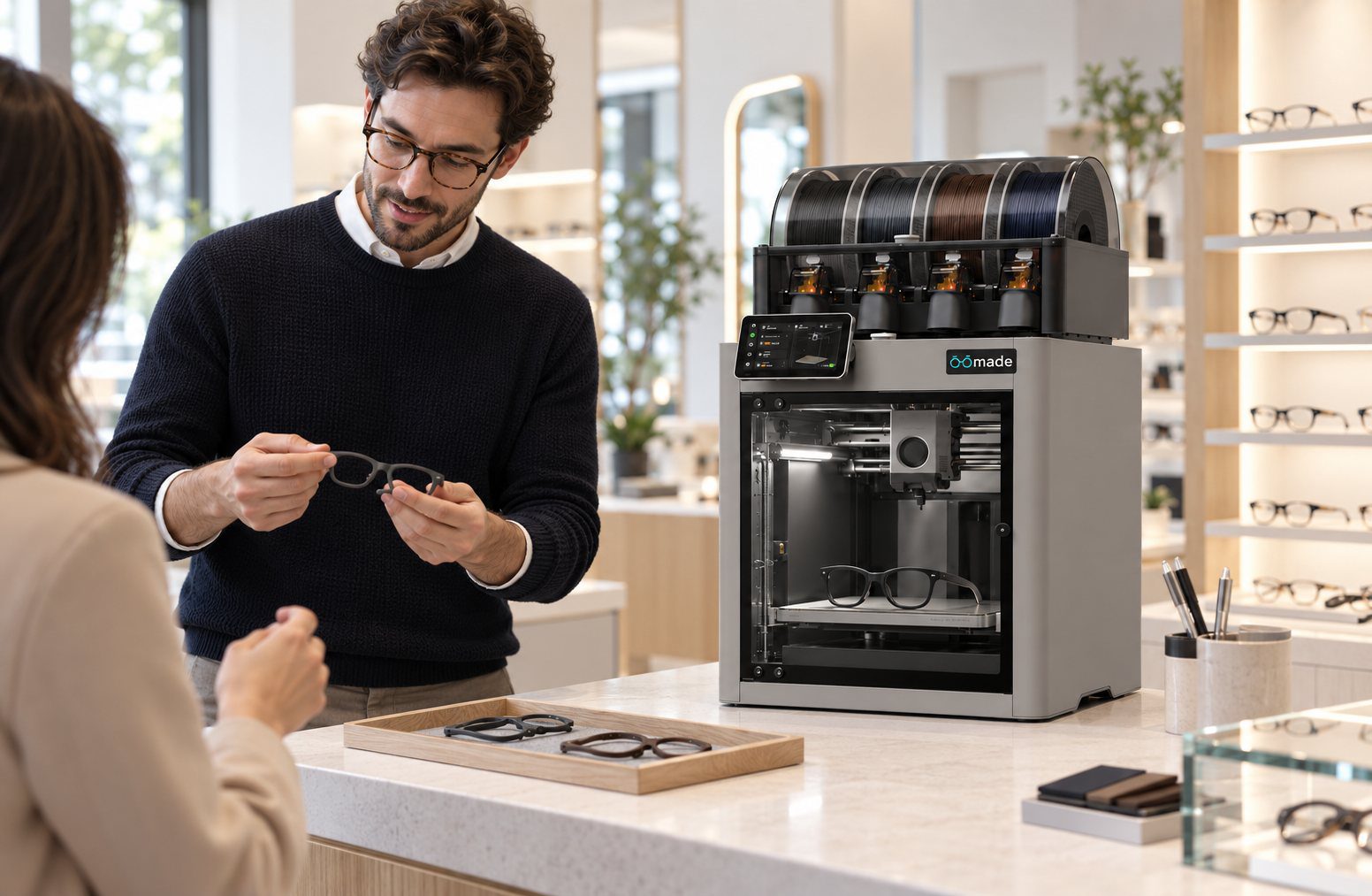
One ecosystem, three revenue streams
It's the first question every optician asks, and most presentations only half answer it by talking only about repairs. Repairs alone don't pay for a machine. The three services together do.
OOframe
The made-to-measure final frame, under your brand.
You no longer resell a supplier's margin on a model the store across the street can order too: you make your own product, with no purchase cost, no tied-up stock, no unsold items. Several tens of minutes per frame.
OOtrace
Repairs in about ten minutes, even for non-customers.
It doesn't pay for the machine, it fills the store. A wearer you help out is a wearer who had no reason to walk in, and 30 to 40% of them come back to buy complete eyewear. It's also the service lens manufacturers have partnered with us on.
OOlib
Countless items ready to print, and the library grows every week.
Printable cases, key rings, seasonal point-of-sale displays, display stands, tools. This is what fills the machine's idle hours and turns occasional equipment into a production station.
It's simple. It's fast. It's in store.
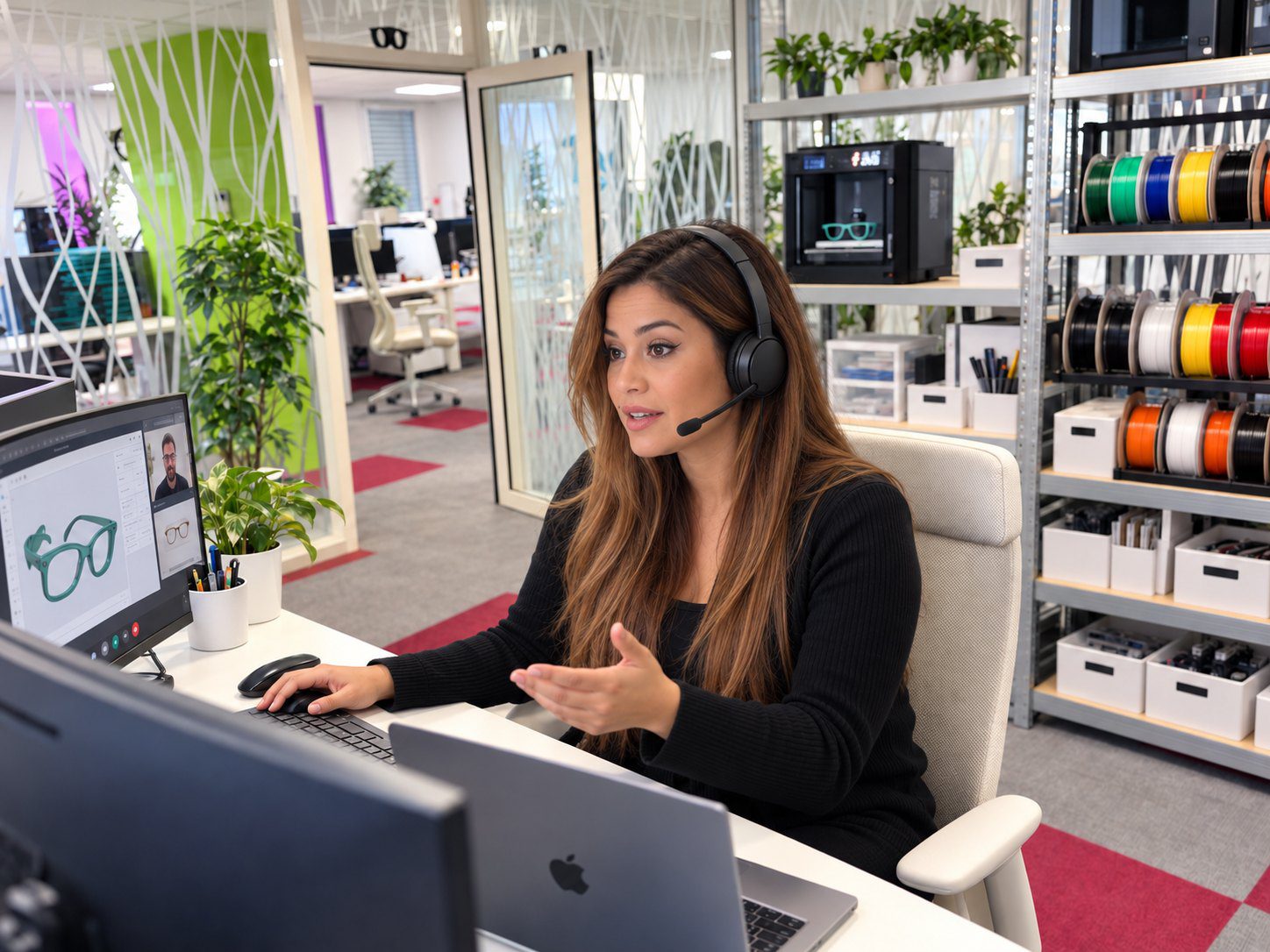
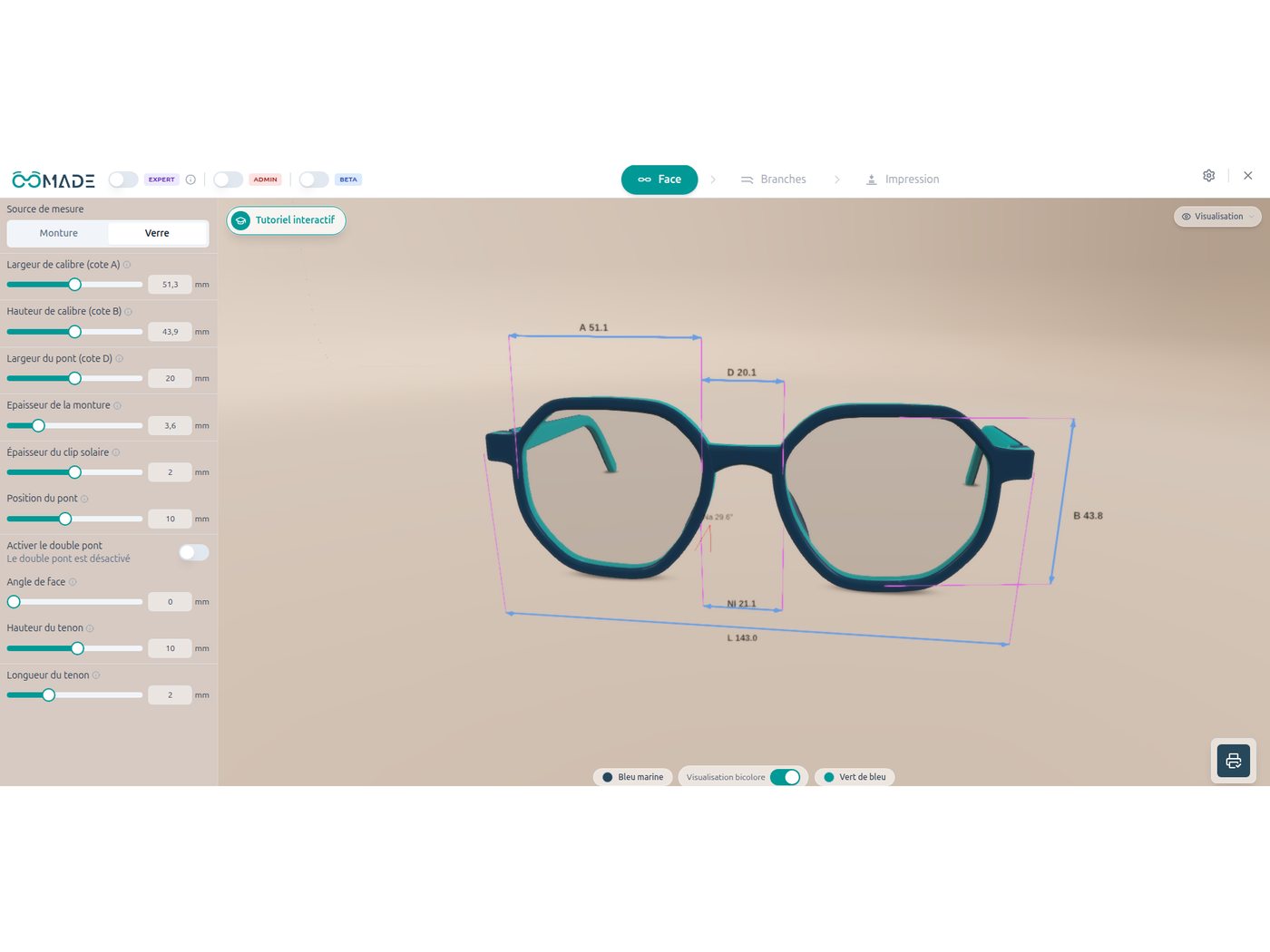
You configure in a few clicks and print. The modeling is done by our 3D generator: no 3D software to master, no new trade to learn. Your usual workshop skills are enough.
About ten minutes for a repair, several tens of minutes for a final frame. And while the machine works, you serve another customer.
Nothing gets shipped out, nothing gets ordered, nothing waits on a supplier. The customer watches their frame being made before their eyes, and leaves with it.
An all-inclusive solution
Delivery, printer, commissioning, training. Consumables are ordered directly from the app's shop. Nothing to configure and nothing to set up: a plug-and-play solution that runs on Wi-Fi.
12-month commitment, as a subscription. The price depends on the region of the world you're in: request a demo and we'll give you the one that applies to you.
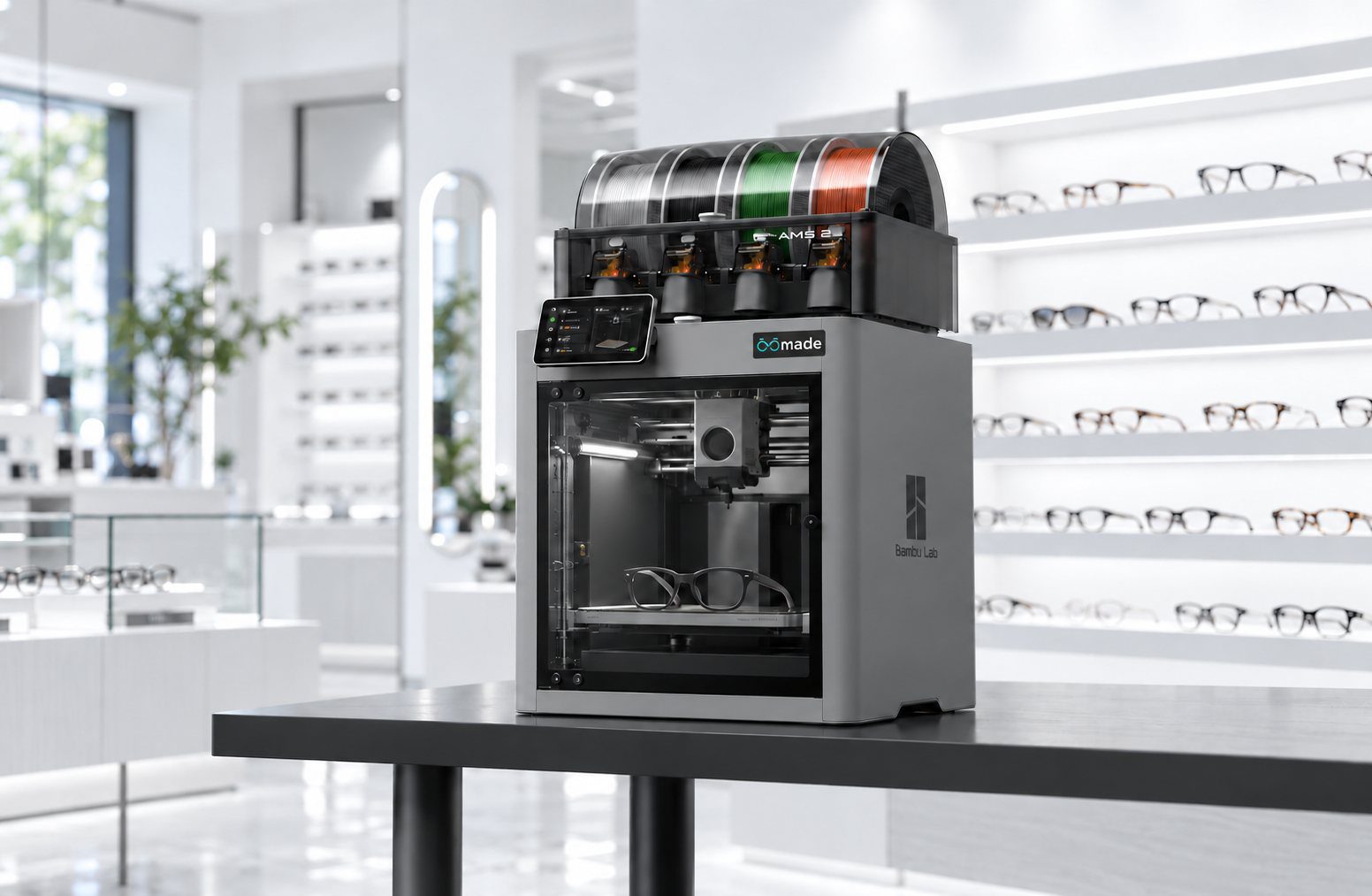
The printer
It fits on a small cabinet or a counter, runs quietly and doesn't get in the way of your customer flow. A clean design made for an optical store: it intrigues customers without looking out of place.
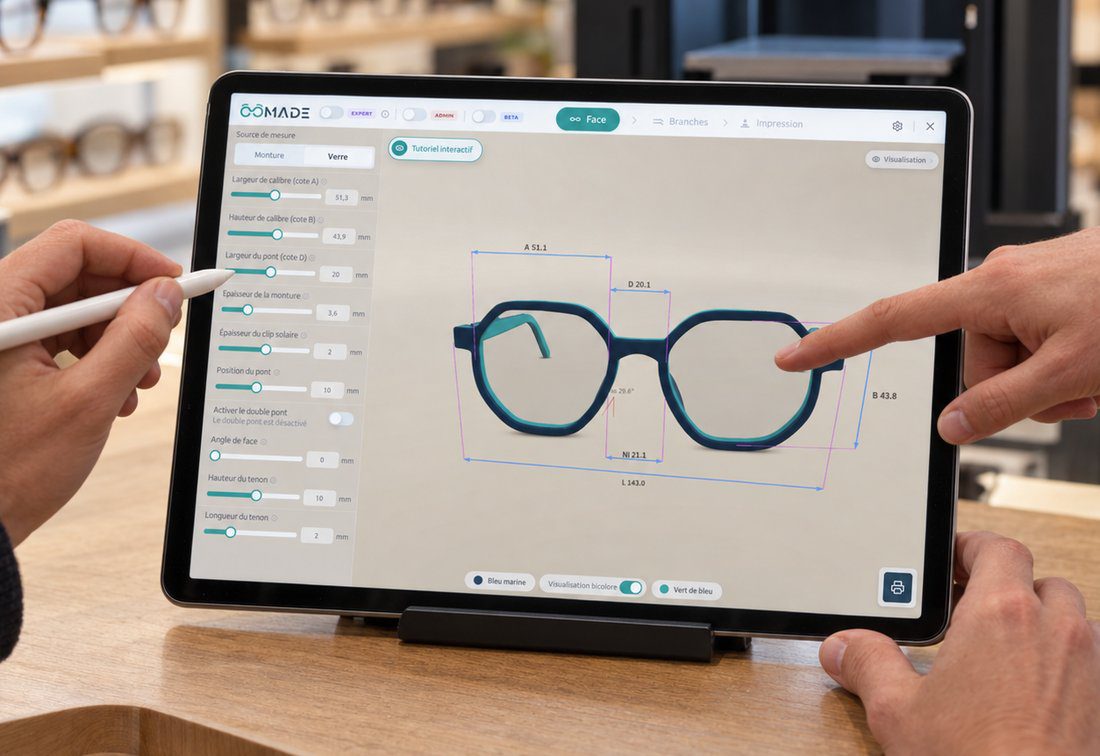
The app
A web interface where you import the tracing, adjust the shape, color and details in a few clicks, then start printing. Behind it, our 3D generator does all the geometry work. No 3D skills required.
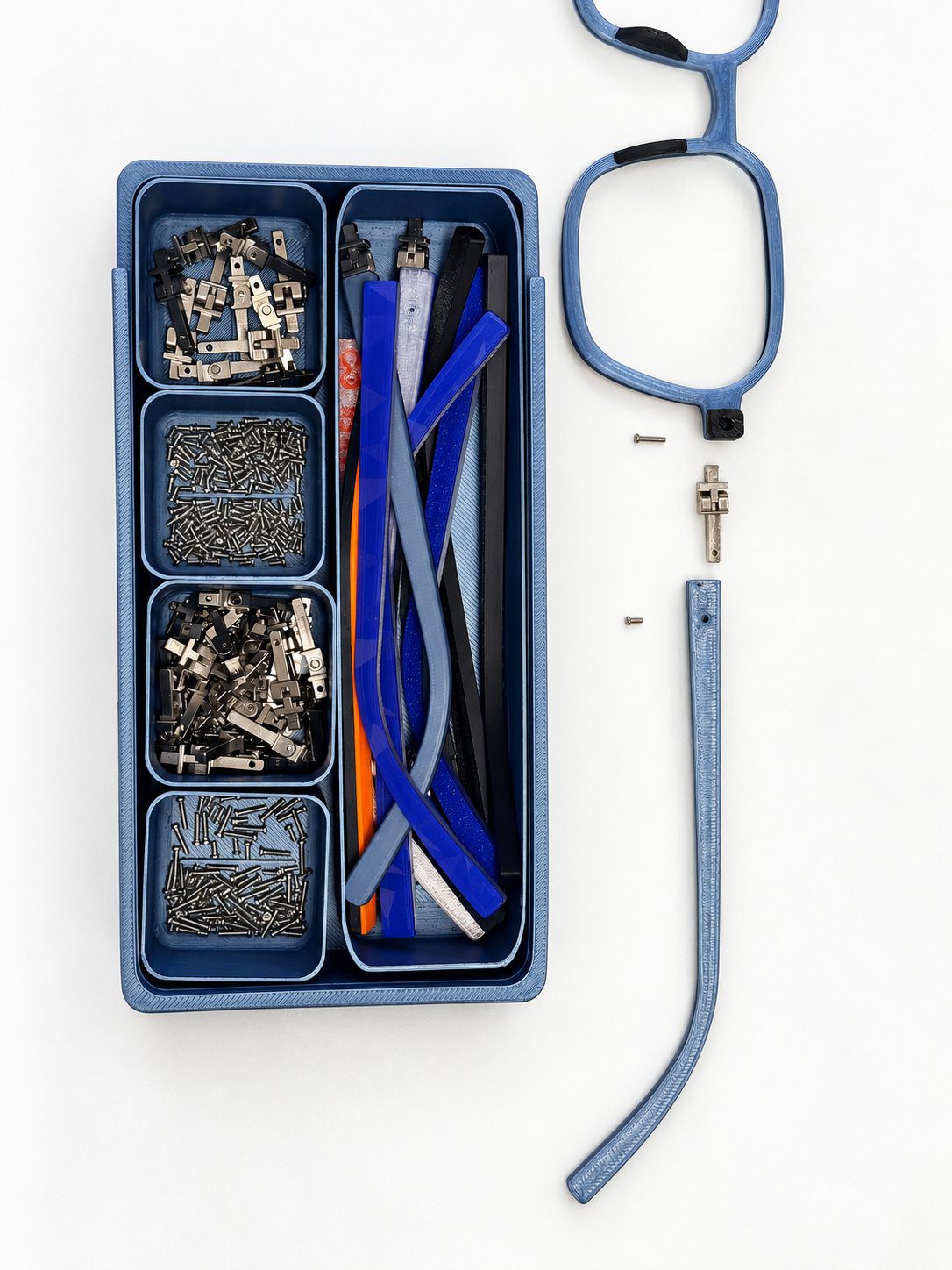
The hinge kit
Included. It's what lets you assemble the frame and fit it on the wearer straight out of the machine, using your usual workshop techniques.
Training
Included. It covers getting started with the app and fitting: no technical 3D-printing training, because none is needed.
Consumables
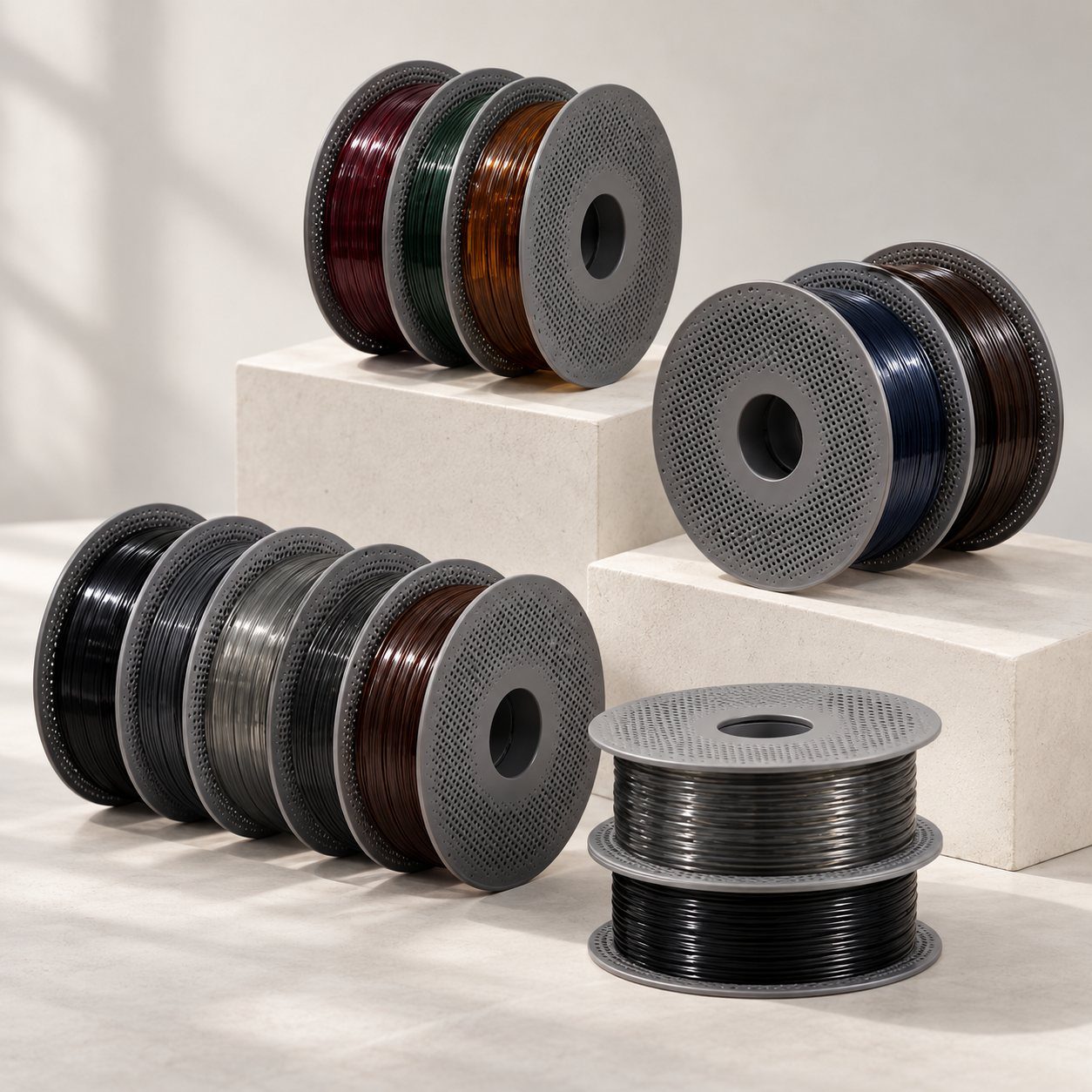
A shop built into the app lets you order them directly: PETG for final frames, bio-based PLA for repairs, and everything you need for the OOlib library.
The network
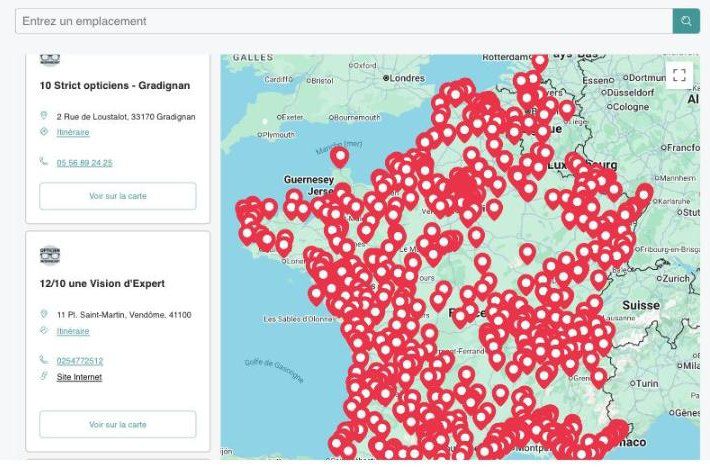
Your store is listed on Vision Minute, the directory of opticians who can do emergency repairs. Wearers in a hurry find you there.
The printer is the visible part. The 3D generator is the heart.
You can buy a 3D printer anywhere. What doesn't exist anywhere else is our 3D frame generator, which turns a lens tracing into a wearable frame in a few seconds, with no manual work.
It's why you have nothing to model. You capture a shape and choose a style; it calculates the lens groove, the thicknesses, the front curve, the hinge axis position and the temple geometry, then writes the machine file. A 3D designer would take half a day. The generator takes a few seconds, and repeats it identically as many times as needed.
It starts from the lens, not a catalog
The captured shape becomes the geometry of the front. Including asymmetrical shapes, which conventional tracing handles poorly, and models nobody has the reference for anymore.
It guarantees wearability
Lens groove, thicknesses, curve, hinge axis: these are optical rules, not aesthetic settings. The generator applies them to every frame, without you having to think about it.
It is reproducible
The same serial number gives back exactly the same frame, years later. That's what makes lifetime after-sales service possible on a frame you made.
It improves without bothering you
The generator runs on our servers. Every improvement in geometry or materials reaches you with no update to install and no machine to replace.
Screenshots of the generator, taken from the tool as it runs today.
Two kinds of production, one machine
If you remember only one thing from this page: your store makes frames. Two kinds, for two completely different moments.
The final frame
Your collection, under your brand, made one at a time.
In ISO 12870-certified PETG. Designed for the customer's face, chosen with them on screen, printed while they wait. It's complete eyewear, sold as such, with the margin of a product you make instead of resell.
The backup frame
Made around the lenses the customer already has.
In PLA, deliberately short-lived. A wearer comes in with a broken frame and intact lenses: you capture the lens shape, print, and refit their lenses. About ten minutes, even if they've never bought anything from you.
Why both, not just one
The final frame brings the margin. The repair brings people in. One sells, the other gets seen: a machine making frames in your window attracts wearers who had no reason to walk through your door, and thirty to forty percent of them come back to buy complete eyewear.
The rest of the ecosystem (accessories, prototypes, lens collection) runs on the same machine, and each service has its own page if you want the details.
On getting started
“As simple as a microwave: you trace, configure in a few clicks, and print.”
There's no technical 3D-printing training to take, because you never operate the printer directly: you use a business interface built for opticians. Onboarding support is included, and it focuses on what you do at the counter.
“Personally, I enjoy making a 3D frame much more than digging through a big box full of temples, and it's more rewarding too.”KrysStrasbourg · Bourgeois
You don't take a size. We take an impression.
Before designing anything, the app captures the face's morphology: width, pupillary distance, height, and above all the shape of the nose.
The 3D generator uses it so the bridge hugs the ridge of the nose instead of just sitting on it. That's exactly what separates a frame made for a face from a frame picked in a roughly matching size: a bridge that hugs doesn't leave marks, doesn't slip, and doesn't need pliers at the end of fitting.
It's also what makes made-to-measure possible without modeling skills: you measure, the generator calculates.
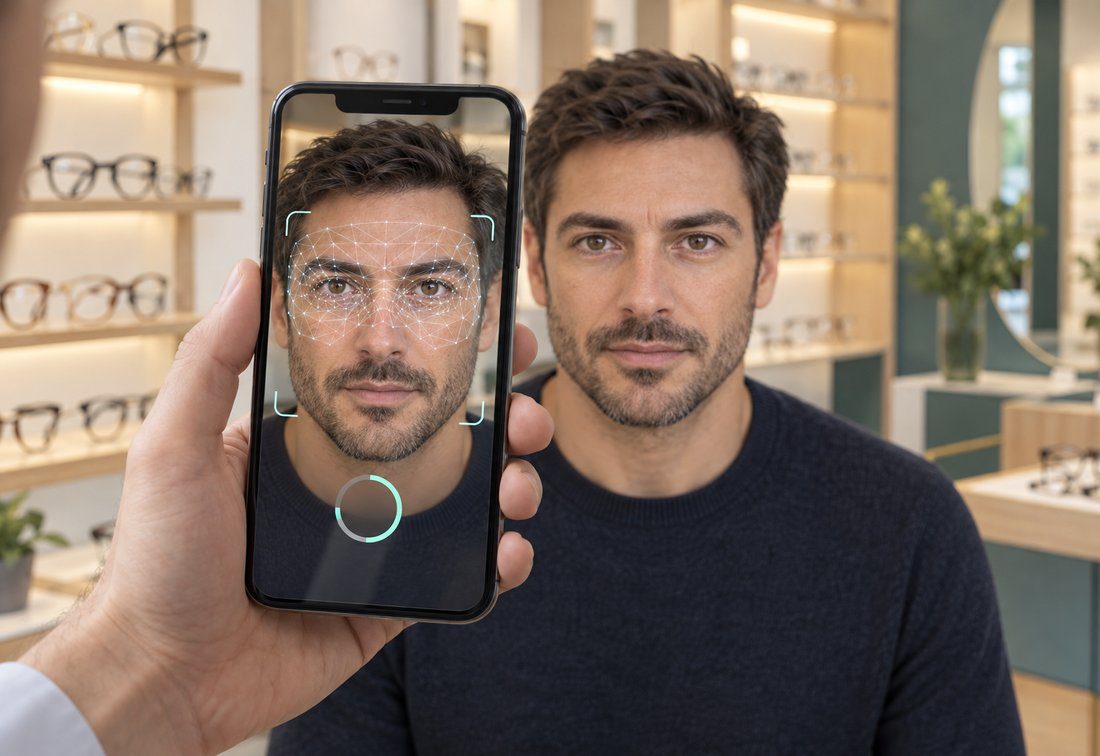 Coming soon
What it delivers once installed
Figures reported by practicing opticians. They vary with location, season and how the machine is used.
of the wearers helped out come back to order a final frame.
Krys Strasbourg-Bourgeois
new customers a month, and about ten per holiday period.
Lynx Optique You Do, Claira
new customers won from local competitors.
Krys Rodez-Gambetta
Real quotes, not slogans
National chains, independents downtown, in shopping malls or in business parks: the service doesn't depend on location.
“The service is great because we can do a repair in 15 minutes, customer feedback is exceptional, and we're the only ones doing it in town. We do it for every glasses wearer in the area, even those who aren't our customers.”KrysDieppe · shopping center
“We put the printer in the middle of the store. People are drawn to it, watch it running and ask us questions. It has a real wow effect.”Lynx Optique You DoClaira · shopping mall
“In my stores, I've made 3D-printed after-sales standard practice. I've thrown out the drawers of spare temples altogether!”Independent opticianDowntown
“The OOmade service lets me stand out in the area; my customers can't believe their eyes.”Independent opticianBusiness park
“I recommend it! Customers are very satisfied. People are starting to talk about it.”Le Collectif des LunetiersGrand-Fort-Philippe
“With the OOmade service, it's super fast. I feel like I've jumped a century!”Independent opticianShopping mall
“A great tool for customers with strong prescriptions who can't do without their glasses!”VisiopolisVilleneuve-lès-Maguelone
“I've worked with lots of 3D printers, but I've never seen one go this fast. It's the Speedy Gonzales of 3D printing!”Independent opticianDowntown
“I put it in the window and the effect is impressive!”Independent opticianBusiness park
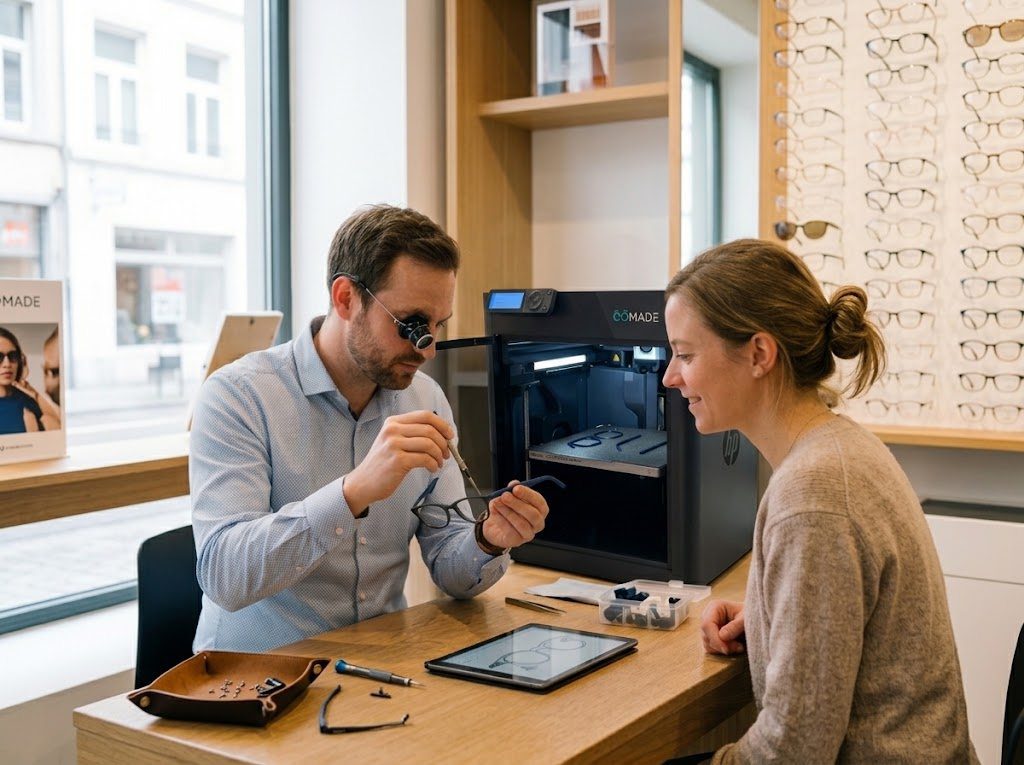
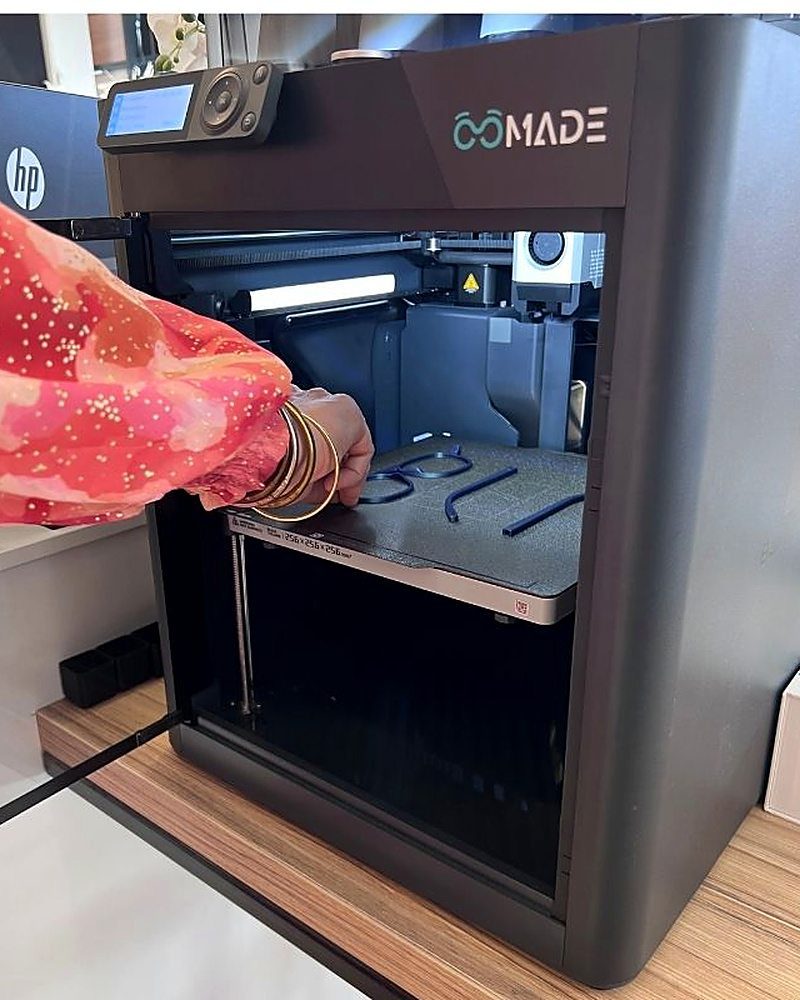
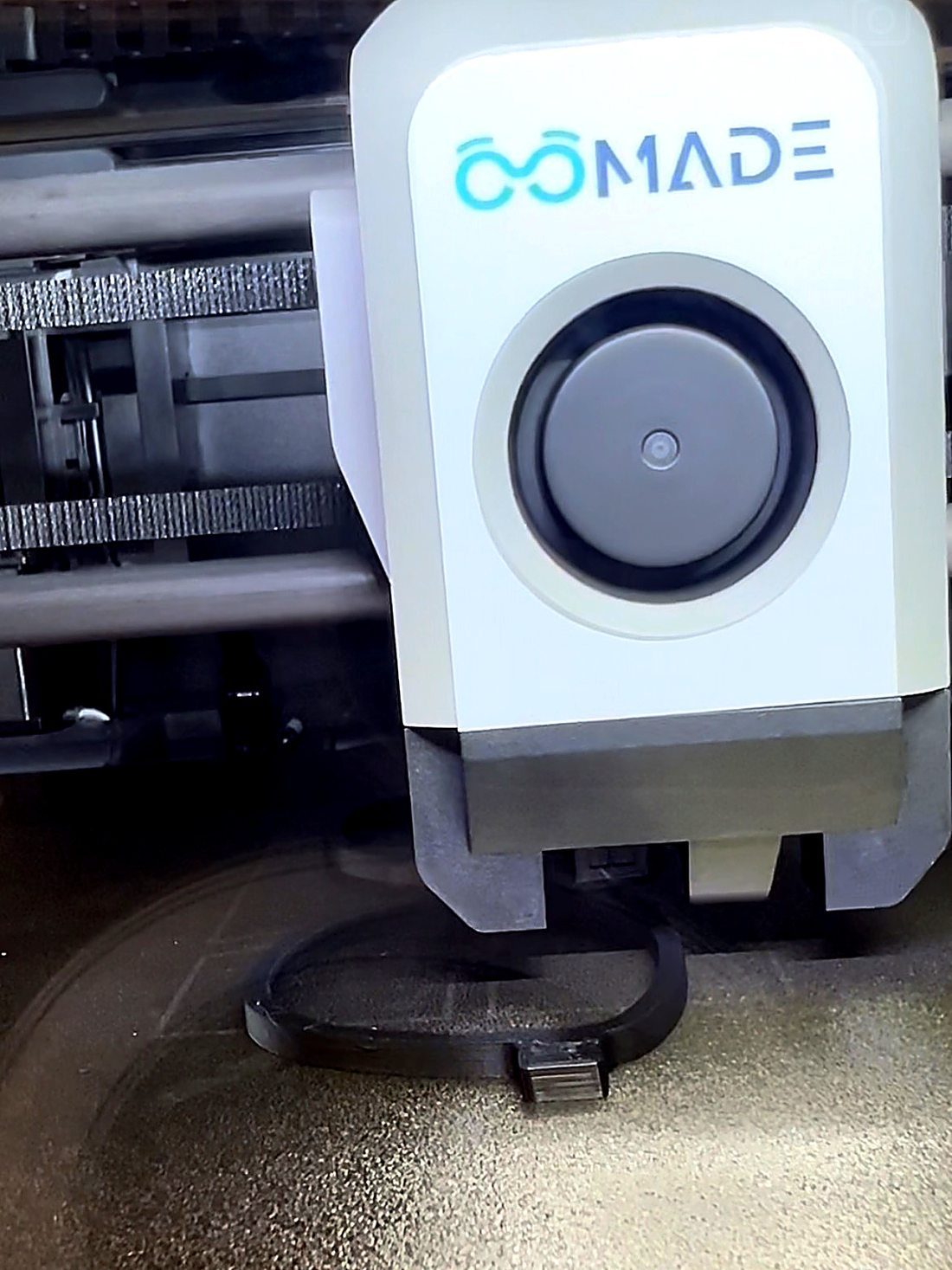
Three equipped stores, photographed at work.
Chain-affiliated and independent customers
Krys, Atol, Optic 2000, Écouter Voir, Lissac, Le Collectif des Lunetiers, Alain Afflelou, Optical Center, LUZ, Optic Libre, Groupe All, CDO. Stores from these chains and buying groups already print in store, alongside unaffiliated independents.
1,000 stores are installed, and the network keeps growing. If you're hesitating, time is working against you: in your area, the question is no longer whether a competitor will get equipped, but which one.







An exclusive collection with no factory
A frame under the chain's brand, made in every equipped store, with no minimum order, no central stock and no unsold items. What it used to cost to develop your own collection, a file now replaces.
Point-of-sale material rolled out by update
An OOlib item can be pushed to every store in a chain the same day. No more campaigns printed by the tens of thousands, distributed and then marked down: each store produces what it uses.
Proof, not intent
Local manufacturing, no shipping, recyclable materials, a frame repairable identically thanks to its serial number. Facts a purchasing department can drop straight into its own reporting.
They're with us on this journey
Lens manufacturers for the lenses, a health platform for equipped stores' visibility.



ZEISS and Novacel
A lens manufacturer has a direct interest in a wearer never being left without a solution: a broken frame means a customer who can't see, who waits, and who sometimes goes elsewhere.
That's why their distributors rely on OOmade to guarantee the usability of the lenses they sell. The equipped optician can promise the customer that their prescription will stay usable the day the frame breaks, and can put it on the quote: it's a differentiator at the time of sale, and a ready-made answer to the after-sales question.
Doctolib
A major player in preventive healthcare in France, Doctolib is the go-to for millions of patients looking for a healthcare professional. That's exactly where the wearer whose glasses have just broken is looking.
Doctolib helps promote Vision Minute in France, the directory of opticians who can do emergency repairs. Extra visibility for your store, right where people already look for healthcare.
The complete FAQ
What is OOmade?
A service platform for opticians, built around a 3D printer installed in your store. It lets you make made-to-measure final frames under your own brand (OOframe), fix a wearer's glasses in about ten minutes from their own lenses (OOtrace), and produce your accessories, point-of-sale material and tools (OOlib).
Silmo d'Or 2024 winner, patented technology.
How does it work, in practice?
You trace the lenses with your usual tracer or with the smartphone scan, which produces a standard OMA file. You configure the frame in the web interface. You start printing while the customer watches, and while you get on with your work. You assemble and fit with the supplied hinge kit.
Is it complicated to use?
No. It's as simple as a microwave: you trace, configure in a few clicks, and print. You never operate the printer directly, you use a business interface built for opticians. Onboarding support is included in the offer.
How long does it take?
About ten minutes for an OOtrace repair, from tracing to assembly. Several tens of minutes for a complete OOframe final frame, temples included.
Either way, the machine works on its own: you can serve another customer in the meantime.
Is the frame strong?
It depends on the service, and that's intentional.
OOframe, the final frame, is made of PETG compliant with ISO 12870, the standard for spectacle frames. It's made to be worn every day, and can be reprinted identically thanks to its serial number.
OOtrace, the backup frame, is made of bio-based PLA and lasts several weeks. Its lifespan is deliberately limited: it lets the wearer see again while a new pair is made, without replacing the sale of final eyewear.
Do I have to sell the backup frame to the customer?
It's up to you. Many opticians give it away or include it in their after-sales service to make an impression. Some charge a token amount, and that goes down very well. Others offer a discount voucher on final eyewear in exchange for returning the printed frame: the customer is happy, and you make a sale.
What if the customer wants to keep their backup frame?
No problem. You can offer them a discount on their new frame in exchange for returning the printed front, which then goes to recycling. It's the gesture that turns the end of a repair into the start of a sale.
Do I need a dedicated room?
No. The printer sits on a small cabinet or counter, runs quietly and doesn't disrupt your usual flow. It needs no edging, no water circuit and no drainage. Placed in view, it even sparks curiosity: several equipped opticians call it their best window display.
Does it attract new customers?
Yes, through two channels. Repairs bring in wearers who weren't your customers: equipped stores report two to three new customers a month, more during holidays. And your store is listed on Vision Minute, the directory where wearers in an emergency look for an immediate solution.
What does it change for my image?
You go from reseller to manufacturer. Where repairs used to happen out of sight in the workshop, they now happen in front of the customer, and become a moment they talk about. Every wearer you help out leaves with a story to tell in your catchment area.
Is it environmentally friendly?
Making on site eliminates shipping, overstock and unsold items: a frame only exists once it's sold. The PLA used for repairs is bio-based, made from corn starch, and both materials are recyclable.
Are the printed fronts recyclable?
Yes. Prescription lenses aren't recycled by OOmade, but the printed fronts are. An optional return service lets you send them back for reuse or material recycling. Return shipping is paid by the sender; the service is available in mainland France.
And the budget?
It's an all-inclusive solution: delivery, commissioning, training. Consumables are ordered directly from the app's shop. And for ZEISS partner opticians, it can be financed with loyalty points: the investment doesn't come out of your cash flow. ZEISS partners on the OOtrace repair service, which matters directly to a lens manufacturer: a wearer whose frame breaks should neither lose their sight nor switch opticians.
The commitment is a 12-month subscription. The solution is delivered ready to run, on Wi-Fi, with nothing for you to configure. The subscription price depends on the region of the world your store is in: we give it to you during the demo.
Bring a broken pair. We'll remake it in front of you.
About ten minutes, and you'll know. In your store, or at a trade show where we exhibit.