


One look can change a life.
Lenses sitting in a drawer can give a child on the other side of the world their sight back. OOcare isn't a service we sell: it's what we do with what the optical industry throws away.
“One look can change a life”, the motto of the Lunettes Espoir Project, led by Maddad Al Wissal.
A commitment, not a service
OOcare has no price, no contractual deadline and no product sheet. It isn't an option in your contract: it's an initiative we carry, as opportunities arise with grassroots associations.
So we don't promise a set number of missions per year. We promise to seize the ones that come up, to go with our machines and our skills, and to report on what was done, as on this page.
Perfectly good lenses sit unused in drawers
Every new pair of glasses leaves behind a pair of usable lenses, often recent ones. In France, they end up at the back of a cupboard or in the trash. Elsewhere, they're sorely needed.
A frame, where there is none
A lens without a frame is useless. That's exactly what our machine can solve: it makes the frame on site, from the lens shape, with no edging and no water, so anywhere.
Morocco, June 2026: the Lunettes Espoir project
With Maddad Al Wissal, in collaboration with the Al Karam Association. Goal of the operation: provide prescription glasses to orphans and children in need.
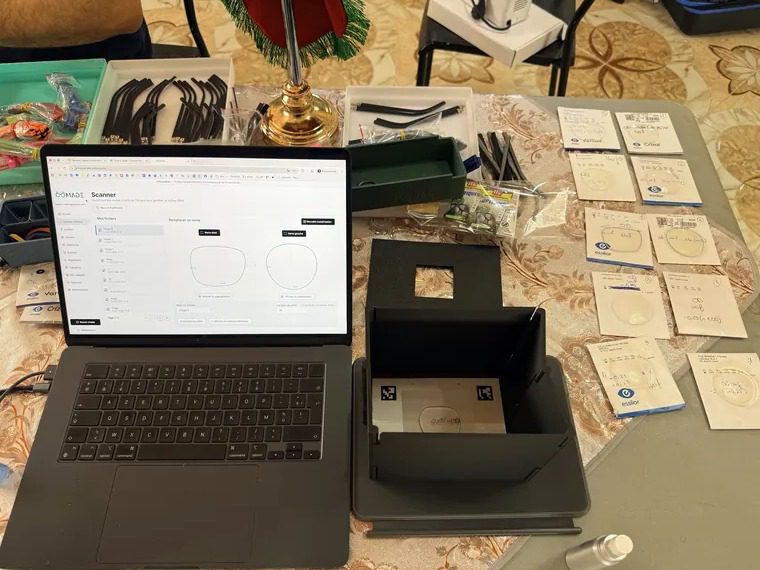
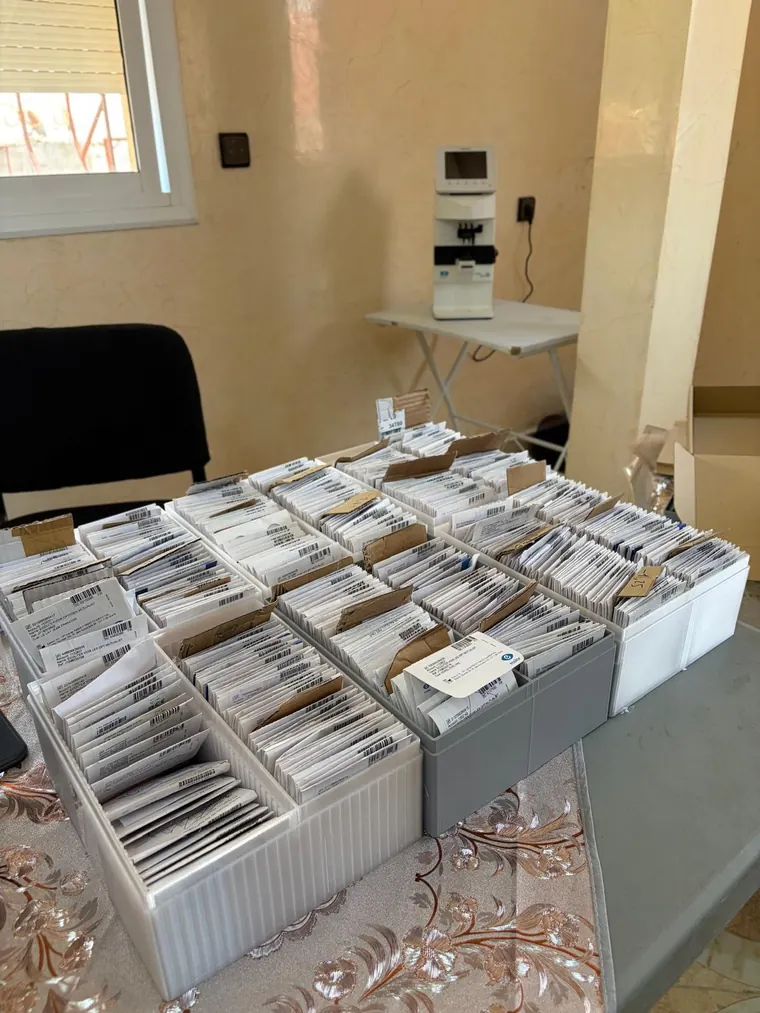
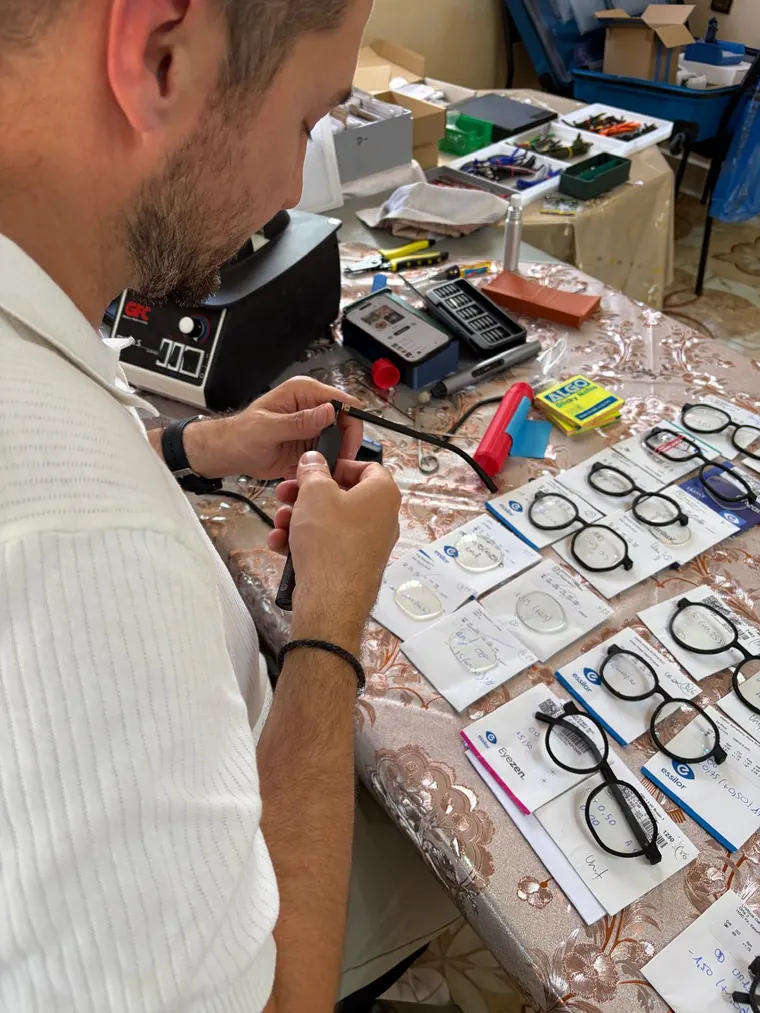
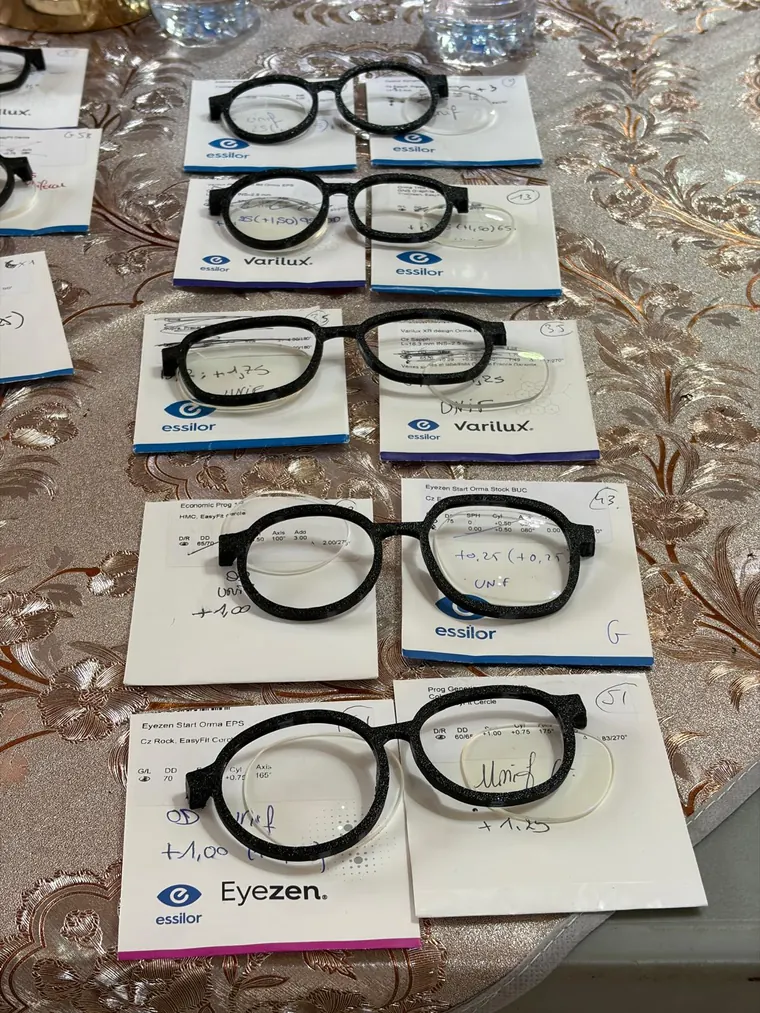
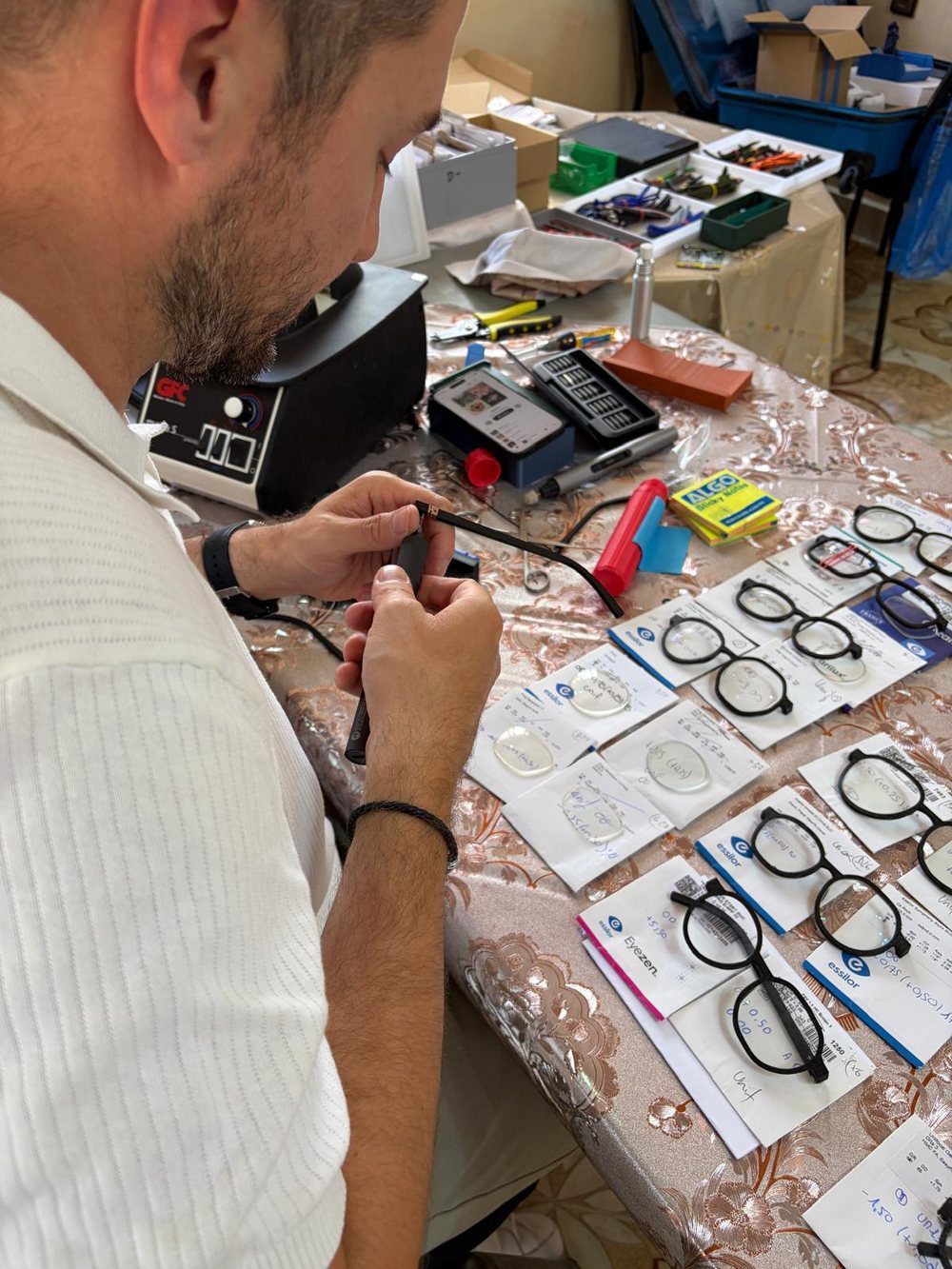
The frames come out of the machine, next to the lenses waiting for them
This is where the logic of repair becomes a humanitarian logic. The same action (reading a lens shape, printing the matching frame) equips a wearer in a hurry in Dieppe and a child in Casablanca. The technology doesn't change; what changes is who it serves.
No shipping, no stock to transport, no workshop to install. One printer, one table, and the lenses the French optical industry was about to throw away.
Why the process works on missions
No edging and no water. No dust, no water circuit, no drainage. A conventional optical workshop is impossible to set up in a room lent for three days; this one fits on a table.
And in the end, someone can see.
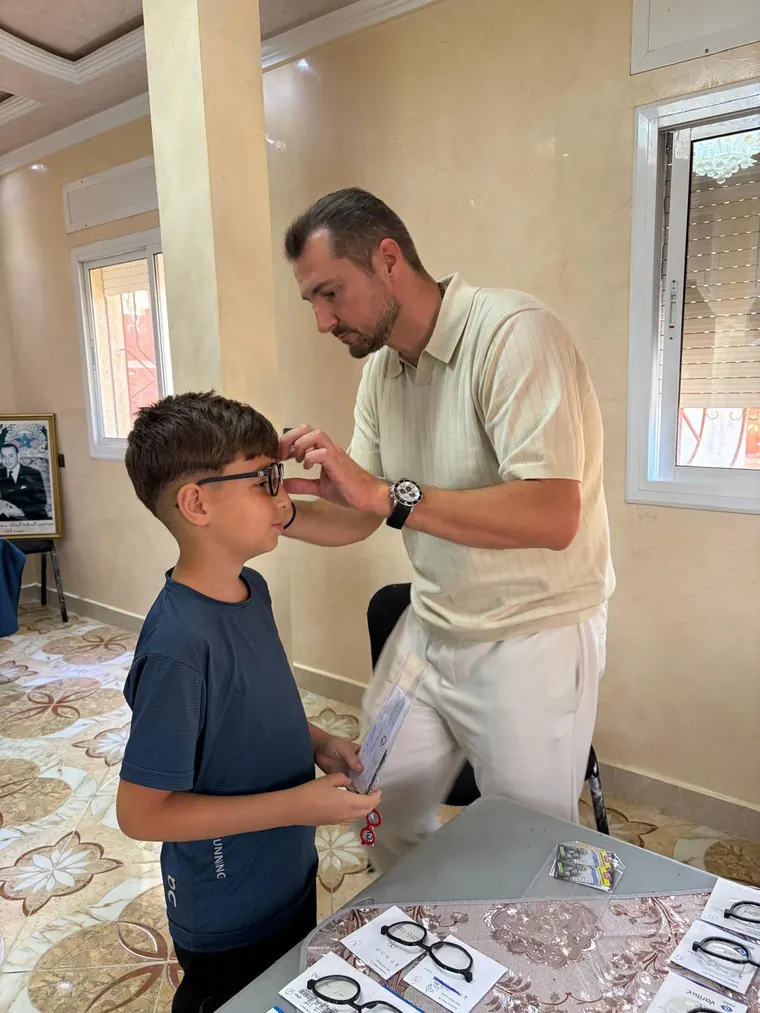
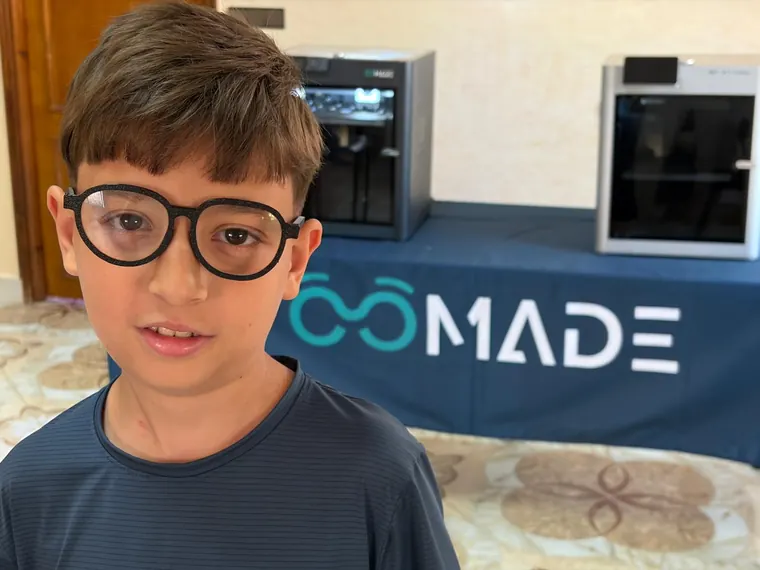
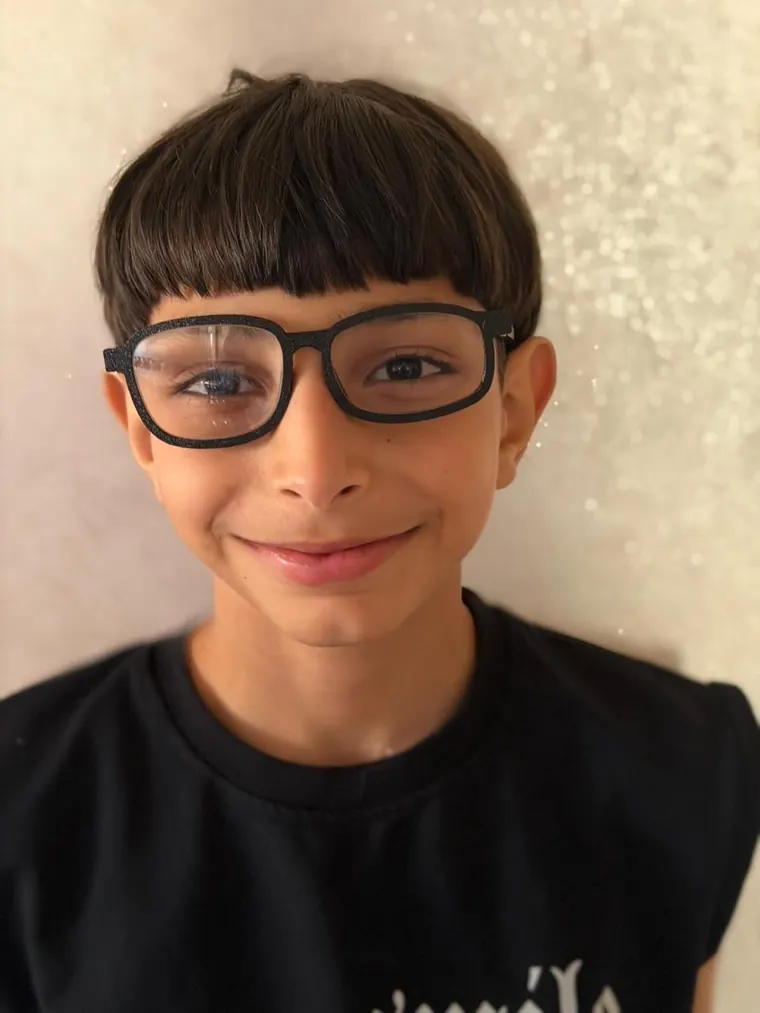
Photos published with the permission of legal guardians, obtained by the association. Other images from the mission show older children for whom permission wasn't obtained: they aren't published.
You can take part. With no obligation at all.
It's open, it's not in your contract, and it never will be.
A commitment imposed by contract reads like a clause. An open commitment reads like a choice, and it's precisely this “no obligation” that makes the initiative credible, yours and ours.
Collect
The lenses your customers leave behind when they get new glasses, instead of throwing them away. All it takes is a box on the counter and one sentence at handover.
Send back the fronts
Used printed fronts come back to us for reuse or material recycling. Optional service, mainland France, return shipping at your expense.
Join a mission
Some operations need an optician's hands on site. If you feel the call, let us know: we keep a list.
And if you do nothing?
You're already supporting it. Part of OOmade's activity funds these operations: subscribing already makes you part of it. Anything more is a bonus, not a condition.
Subscribing to OOmade means supporting OOcare.
If you collect or distribute glasses, write to us.
That's exactly what we're looking for. We bring the machines, the optical expertise and on-site manufacturing; you bring the field presence, the beneficiaries and local logistics.
We have no program to sell you and no form to fill in. A mission starts with a message from someone who has children to equip and no solution.
The contact form has a “you are” field: choose “NGO / association” and your message won't get lost among sales inquiries.
What we can actually do
- Read the shape of an existing lens and make the matching frame, one at a time
- Work with no edging, no water and no drainage, so in a borrowed room
- Produce in series on site: a frame every few tens of minutes, continuously
- Adapt sizes to children's faces, which a stock of donated frames almost never allows
What we can't do: mass refraction, transport and medical follow-up. That's why we're looking for partners rather than beneficiaries.
To each their lens, to each their story
Two lenses that never belonged to the same person, or came from the same place. One frame designed for one face, printed where that face is.
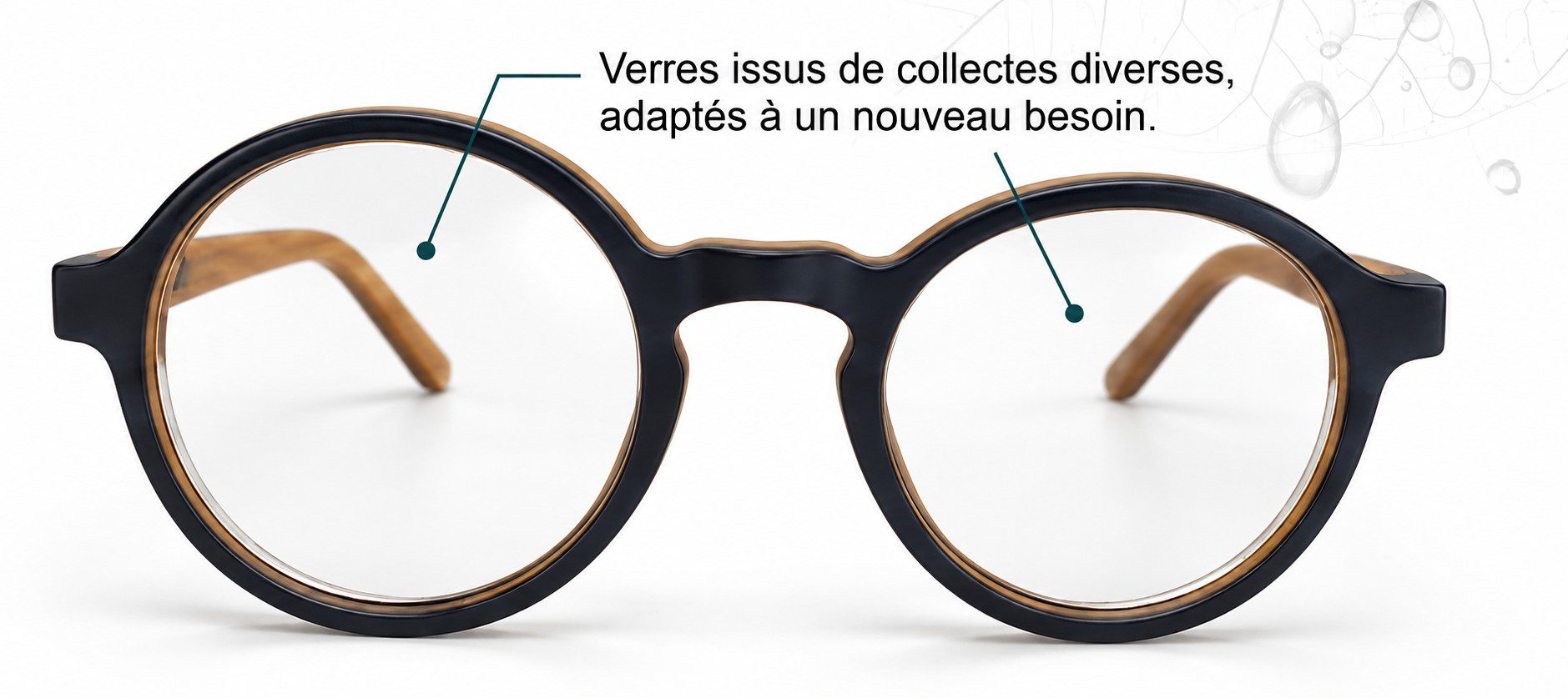
The collection
Prescription lenses dropped in OOmade collection boxes in store. From glasses people replaced, but whose prescription is still good.
Sorting
Every lens is analyzed and measured by partner opticians. A pair is matched to its prescription before being assigned to someone.
The mission
The selected lenses are fitted into OOmade frames printed on site during a humanitarian mission, for people who have access to nothing.
Why it only works with a machine on site
A used lens has a shape, a diameter and a prescription all its own. Forcing it into a standard frame means re-edging it, shifting the axis, and damaging the very prescription you wanted to save.
Here, the frame adapts to the lens. It's exactly what OOtrace does, transposed to the field.
And then there's CSR, which is not the same thing
Everything above is humanitarian: missions, associations, donated lenses. What follows is of a different nature. It's the low footprint of the process itself, and it applies to every frame sold in your store, mission or not.
We make a point of keeping them separate. Mixing the two would pass off an industrial process as an act of generosity, and dilute the missions into a procurement pitch. Both are true; they don't serve the same purpose.
Two polymers, two roles
The PETG in OOframe final frames is recyclable and ISO 12870-certified for everyday wear. The PLA in OOtrace repairs is bio-based, made from corn starch, and deliberately short-lived: it lasts long enough to get final eyewear made.
Making where you sell
No freight, no overstock, no unsold items, no markdowns. A frame travels three meters from the machine to the counter, and is only made once it's sold.
Repairable, not replaceable
The serial number recalls the frame's exact geometry years later. A broken temple is reprinted on its own, instead of forcing the wearer to buy a whole new frame. That's after-sales service, not humanitarian work.
Recycling printed fronts
Prescription lenses aren't recycled by OOmade, but the printed fronts are. An optional return service lets you send them back for reuse or material recycling.
Return shipping paid by the sender. Service available in mainland France.
For chain management or a health insurer
“Frame made on site, with no shipping, from recyclable material, identically repairable throughout its life” is a sentence a purchasing department can drop straight into its own reporting.
It describes a process, not an intention, and it can be verified. The lens reuse chain belongs to OOcare missions: it's something we share, not something we put in a contract.
You have lenses. We have machines. What's missing is the field.
Associations, NGOs, volunteer opticians: the next mission begins with a message.