


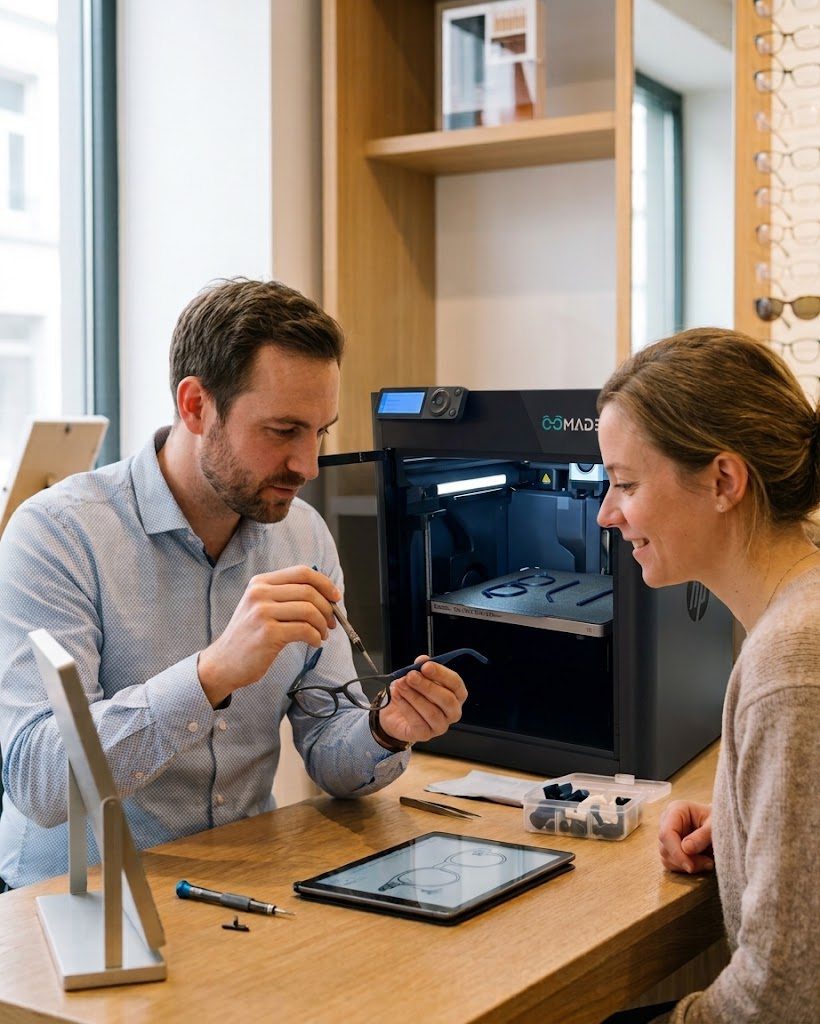
Broken glasses? The customer leaves equipped the same day.
You scan the shape of their lenses with a smartphone, print a fitted frame on the spot and refit their original lenses. About ten minutes, no supplier order, no new lenses, no “come back in ten days”.
A frame breaks every 19 seconds in France
broken frames. Each one is a wearer who, that day, walked into an optician's and walked out with a makeshift fix, or with nothing.
OOmade estimate: 1,600,000 breakages a year in France.
Three classic answers, and none of them is good
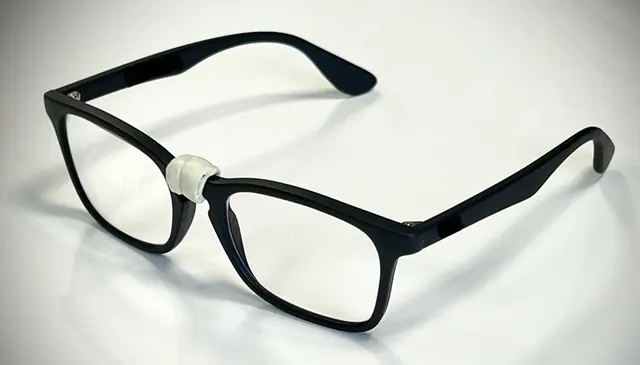
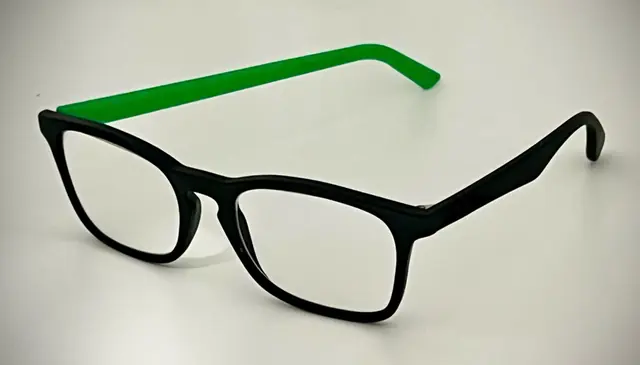
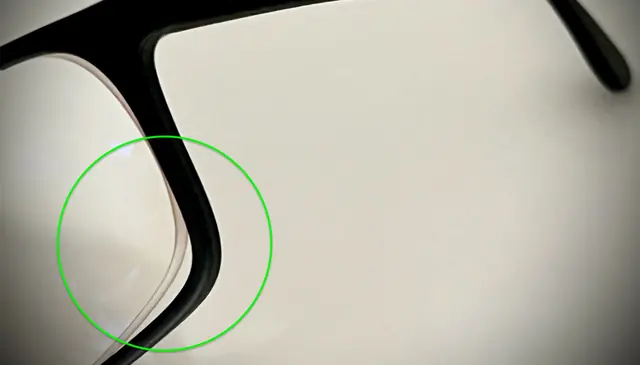
Which leaves the fourth answer: order, wait ten days, and let a wearer who can no longer see walk out. Many will then try the optician next door.
The lens becomes the template
That's the whole idea of the service: the shape you need is already right in front of you. It's in the customer's lens.
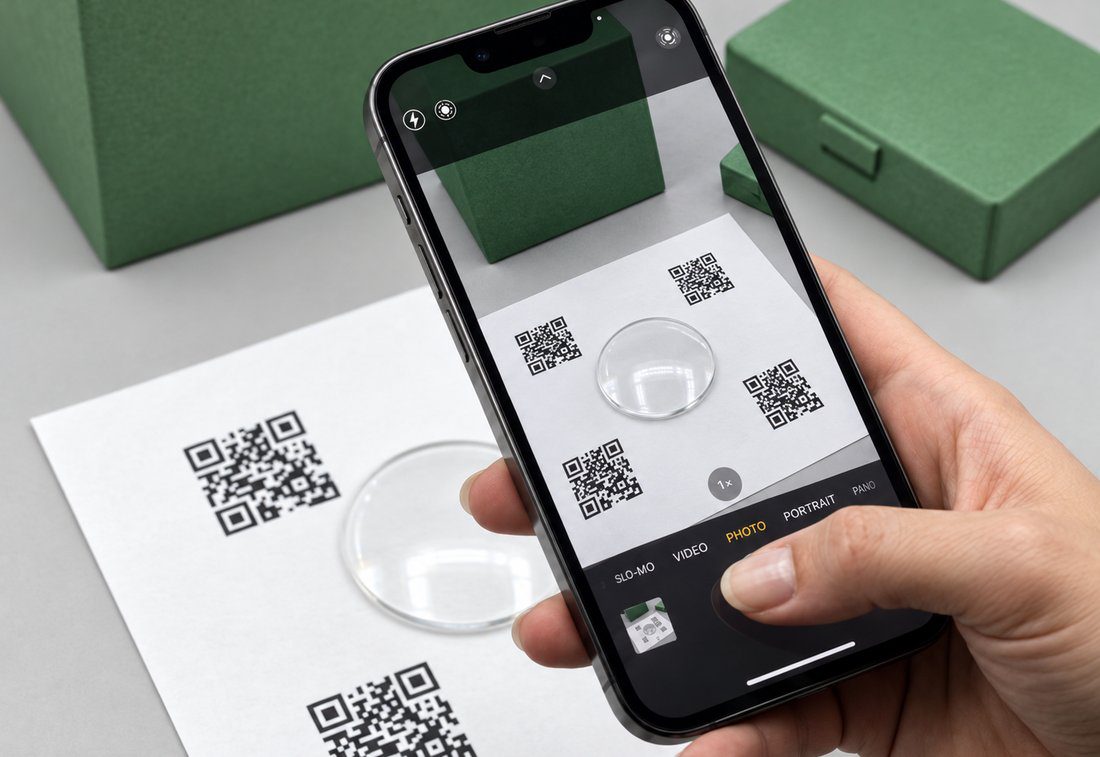
Scanner
A smartphone is all it takes. OOtrace captures the exact shape of the lenses, even asymmetrical ones, and reinvents the conventional frame tracer with proprietary calibration. No supplier reference to track down.
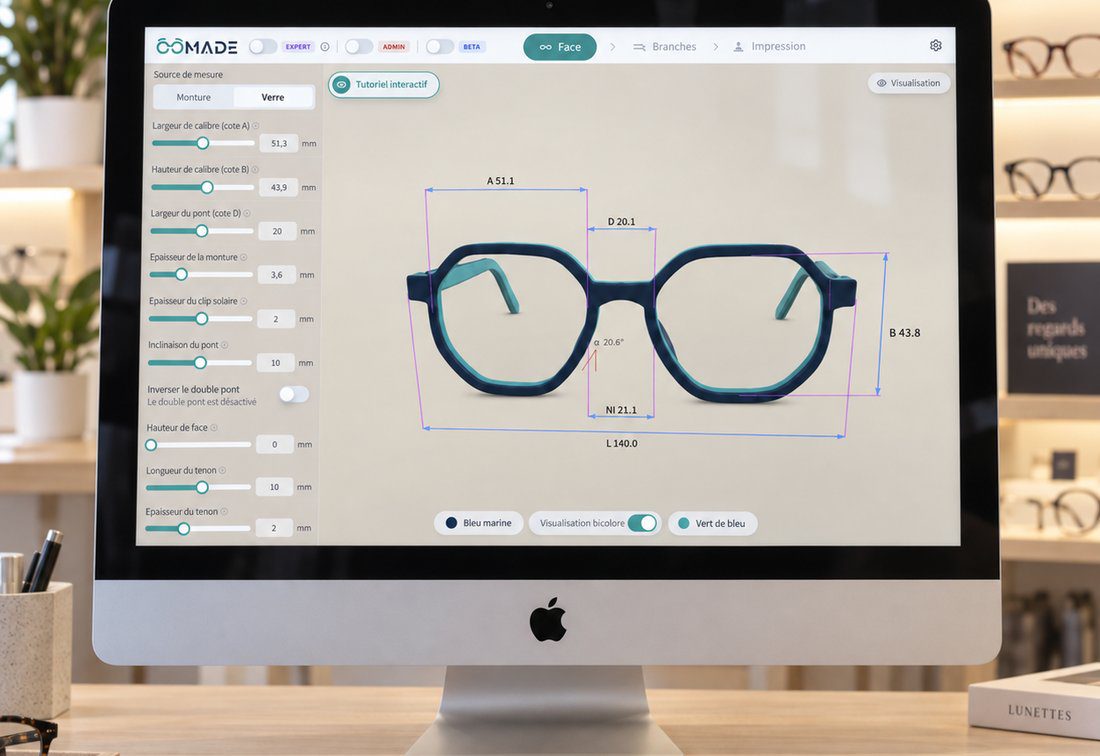
Model
The front redraws itself to the exact shape of the captured lens. The scan produces a standard OMA file, usable by the machine and by any lab: you're not locked in anywhere.
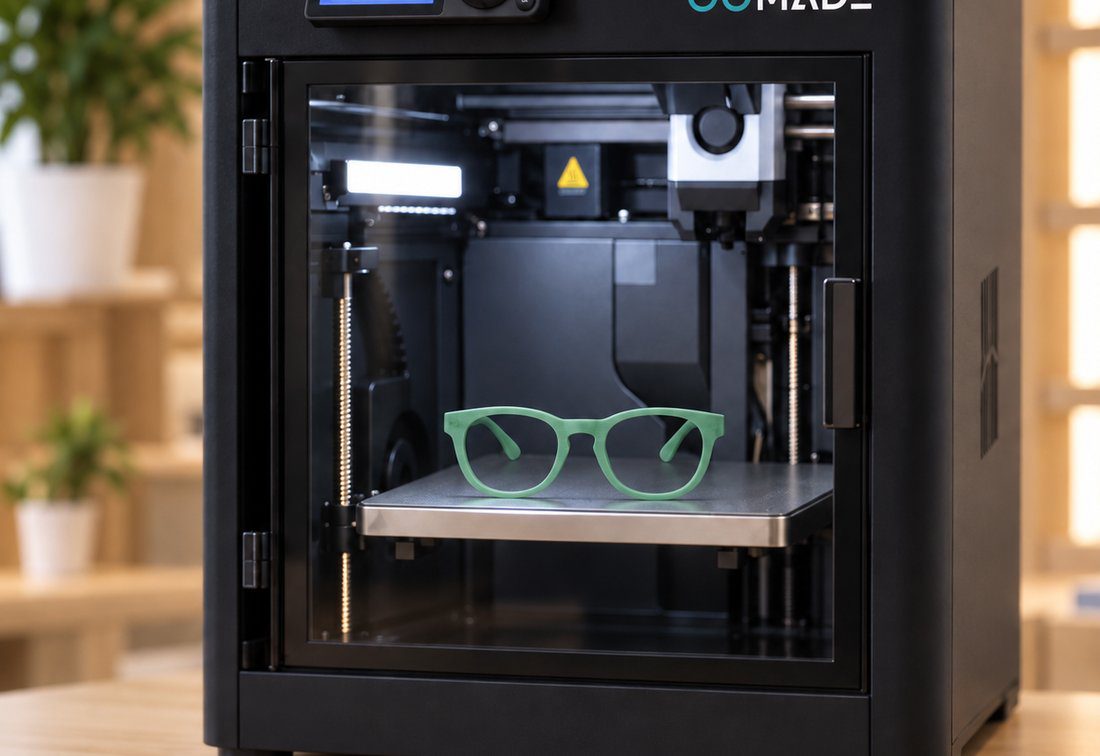
The frame prints on site, with no edging and no water. You refit their original lenses: no new prescription, no new lenses, no new quote. The customer leaves delighted, with a story to tell.
- Duration
- About ten minutes
- From scan to the customer walking out, in store.
- Output format
- OMA file
- The optical industry standard: readable by your equipment and your labs, not just ours.
- Lenses
- Their own
- Including asymmetrical shapes, which conventional tracing handles poorly.
- Material
- PLA
- Short-lived by design: the backup frame must not replace the sale of the final one.
- Workshop
- No edging, no water
- No dust, no water circuit, even in settings where a conventional workshop is impossible.
The service filmed in store. Video hosted by YouTube: it only loads once cookies are accepted.
What you commit to in store
The wearer remembers the speed. For you, the value lies elsewhere: you announce a lead time without checking stock, placing an order or having to call back. The promise holds because it depends on no one but you.
- Capture
- To a hundredth of a millimeter
- The outline comes from your customer's lens, not from a catalog of approximate shapes.
- Hinges
- Metal, 180° flex
- A frame that survives a pocket and a bag, not just a photo shoot.
- Printing
- About ten minutes
- About the time of a coffee. The customer waits on site, or goes shopping and comes back.
- Process
- Patented
- Filed with INPI, the French patent office. The process can't be copied.
One of frame the troubleshooting remains frame a troubleshooting issue.
And that's intentional. It's printed in PLA, a material with a deliberately limited lifespan: a few weeks. It isn't meant to last: it's meant to save the wearer's sight while they get complete new eyewear.
A backup frame that lasted too long would be bad news for you. It would replace the sale instead of preparing it, and you'd have spent ten minutes destroying your own eyewear sale. OOtrace is designed the other way round: help immediately, without ever taking the final-frame sale away from the optician.
The repair protects the client's eyesight.
It also protects your sale.
Two materials, two intentions
- OOtrace
- PLA
- Short-lived by design. Just long enough to see again, and to come back and choose.
- OOframe
- PETG · ISO 12870
- Final. Designed to be worn every day, and reprintable identically.
Both materials are recyclable.
And the next pair follows
30 to 40%
of wearers you help out come back to buy complete eyewear: an OOframe frame, or any other frame in your store.
Krys Strasbourg-Bourgeois
Every customer you help out becomes an ambassador released into your catchment area.
For twenty-four or forty-eight hours, they wear a frame that gets noticed. Colleagues, neighbors and family ask what happened to their glasses. And they tell the story: their optician reprinted them while they waited.
It's word of mouth you can't buy, and it's geographically targeted : it happens exactly where your customers live, in the conversations where an optician's name still gets passed on. Even if it only lasts a day.
Lens manufacturers are OOtrace partners. And it makes sense.
A lens manufacturer has a direct interest in making sure a wearer is never left without a solution. A broken frame means a customer who can't see, and who often goes elsewhere.

The lens usability guarantee
ZEISS relies on OOmade to support its distributors. The goal is simple: let the optician who sells their lenses promise the customer that their prescription will stay usable the day the frame breaks. No lost vision, no week of waiting, no customer gone to a competitor.
And for ZEISS partner opticians, the solution can be financed with loyalty points: the investment doesn't come out of the store's cash flow.
Why short-lived also reassures the lens manufacturer
A PLA backup frame, with a deliberately limited lifespan, never becomes free replacement eyewear. It saves the wearer's sight for a few weeks, and brings them back to buy complete eyewear.
Repairs don't replace the sale. They trigger it. That's true for the optician, and it's true for whoever sells them their lenses.
And they're not the only ones
Novacel also supports us. Lens manufacturers see it the same way: every broken frame is a moment when a customer can be lost, and an immediate repair closes that gap.
This is the service on which lens manufacturers have partnered with OOmade: not the making of final frames, which is a different trade.
Four wearers for whom “come back in ten days” doesn't work
They're 600 km from their optician, with two weeks ahead of them and no glasses. You're the only store in the resort that can fix it the same day.
“Holidaymakers in the area are delighted to get a backup frame and enjoy their vacation!”
Krys Claira
They've never bought from you. They leave with a solution, your name in mind, and eyewear to replace in the coming months.
“We do it for every glasses wearer in the area, even those who aren't our customers.”
Krys Dieppe · CC Auchan
Kids break their glasses often, and rarely at a good time. Parents have neither the time nor the patience to wait ten days with a child who can't see the board.
“The customer is happy because it's quick. People are delighted because we can help them right away!”
Krys Argelès-sur-Mer
Without their glasses, they literally can't function. This is the wearer for whom “come back in ten days” is not an acceptable answer.
“A great tool for customers with strong prescriptions who can't do without their glasses!”
Visiopolis, Villeneuve-lès-Maguelone
The machine works for you even when it isn't running
Placed in the window or in the middle of the store, it attracts, intrigues and draws people in. Several equipped opticians mention this before the service itself.
“We put the printer in the middle of the store. People are drawn to it, watch it running and ask us questions. It has a real wow effect.”Lynx Optique You DoClaira · CC Carrefour
“In my stores, I've made 3D-printed after-sales standard practice. I've thrown out the drawers of spare temples altogether!”Equipped opticianAnonymous quote
 Vision Minute
And the network sends these wearers to you
A wearer breaks their glasses, searches “emergency optician” on their phone, and finds the nearest equipped store. Vision Minute is the directory that makes that connection, and you're listed because you know how to make frames.
What it's worth in practice
“2 to 3 new customers a month, about ten per holiday period”, Lynx Optique You Do, Claira.
“About ten new customers won from local competitors”, Krys Rodez-Gambetta.
Figures reported by equipped stores, which vary depending on location and season.
What we're asked most often
Do you need the customer's lenses, or an original frame?
The lenses are enough. That's exactly the point: OOtrace scans the lens shape and derives the frame from it, where a conventional tracer needs a template or a supplier reference. If the original frame is in pieces, it doesn't matter at all.
What if the two lenses aren't exactly the same shape?
It's common after a re-glazing or on older eyewear, and it's handled: the scan captures each lens separately, including asymmetrical shapes.
Can the file be used outside OOmade?
Yes. The scan produces an OMA file, the optical industry's standard format. It can be read by your workshop equipment as well as by a subcontractor. You're not locked into a proprietary format.
Do I have to replace the lenses?
No, and that's the whole point. The customer leaves with their original lenses and original prescription, with no new prescription and no new quote. You bill a service, not complete eyewear.
How long does it really take?
About ten minutes in store, from scan to the customer walking out. The time for a coffee, or an errand in the shopping mall.
How long does a backup frame last?
Deliberately not long. It's printed in PLA, whose lifespan is limited by design: it lets the wearer see again right away, while a new pair is made.
It's a choice, not a limitation we put up with. A backup frame that lasted too long would replace the sale of final eyewear instead of preparing it. In practice, 30 to 40% of the wearers helped out come back to order a made-to-measure frame: that's the OOframe service, in ISO 12870-certified PETG.
Can I help someone who isn't my customer?
It's actually the most profitable use. Equipped opticians do it as a rule: a wearer helped out today is eyewear to renew tomorrow, and they'll remember who got them out of trouble.
Do you need a special workshop?
No. The process works with no edging and no water: no dust, no water circuit, no drainage. That's also what makes it usable in settings where a conventional workshop couldn't be installed.
Bring us a broken pair. We'll remake it in front of you.
It's the demo we do at trade shows, and it's the only one that convinces. At a trade show where we exhibit, or right in your store.